Best Cycling Routes in the Algarve: Local Road Cycling Guide
If you’re searching for the best cycling routes in the Algarve, the first thing to understand is that there isn’t one single route that defines the region.
That’s part of what makes cycling here so good.
The Algarve gives you everything from relaxed coastal rides and rolling countryside to long mountain climbs, quiet inland roads and full-day adventures through some of southern Portugal’s least visited areas.
Having lived in Portugal since 2006 and spent years riding these roads, I’ve learned that the best routes are not always the ones with the biggest names. Some of the most enjoyable days on the bike come from joining together smaller roads through villages, valleys, farmland and hills that most visitors would never think to explore.
In this guide, I’ll take you through the types of routes I think show the Algarve at its best, where to find them, what sort of rider they suit and what to expect once you leave the busier coastal areas behind.
If you’re still deciding whether the Algarve is right for your next cycling trip, start with my complete guide to cycling in the Algarve before coming back here to look at individual riding areas.
What Makes a Great Algarve Cycling Route?
For me, a good route isn’t simply about distance or metres climbed.
It needs to flow.
I want roads that are enjoyable to ride, not simply roads that get us from A to B.
That usually means a combination of:
- low traffic
- good road surfaces
- interesting scenery
- sensible gradients
- rewarding descents
- somewhere good to stop for coffee
- enough variety to keep the whole ride interesting
One of the advantages of cycling in the Algarve is that you can often combine all of those things within a relatively small area.
A ride might begin close to the coast, head inland through rolling countryside, climb into the hills, stop in a traditional village and then return by a completely different road.
The distance on paper might only be 60 or 70 kilometres, but because the terrain and scenery keep changing, it feels like a proper day out.
1. Monchique and Fóia
If you’re an experienced cyclist visiting the western Algarve, sooner or later you’ll probably look towards Monchique.
The mountain town sits inland from Portimão and Lagos and provides access to some of the best-known climbing in southern Portugal.
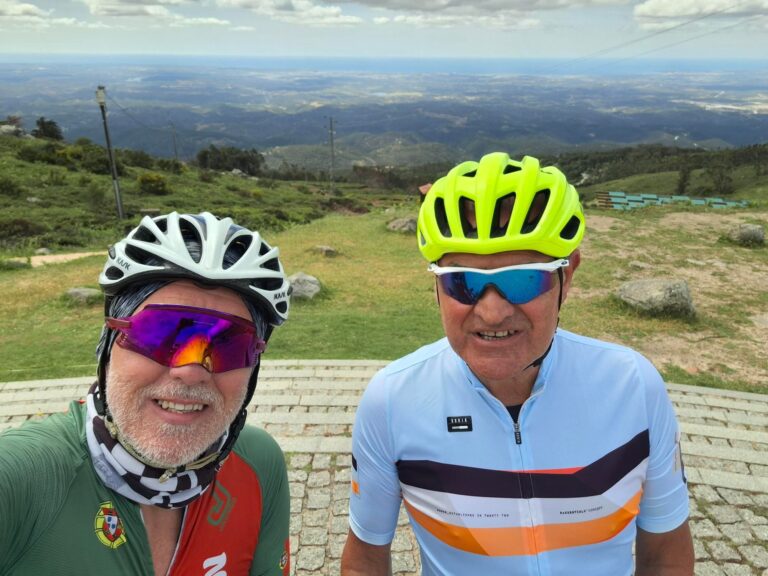
Above Monchique is Fóia, the highest point in the Algarve at 902 metres.
For many visiting road cyclists, reaching the summit is one of the obvious targets of the trip.
But I think reducing the whole area to one climb misses the point.
The roads around Monchique are excellent in their own right.
You have long climbs, forested roads, technical descents, wide views across the Algarve and plenty of opportunities to create different loops depending on how much climbing you want.
Who is it for?
Monchique is best suited to riders who are comfortable with sustained climbing.
You don’t need to be a racer, but you’ll enjoy it much more if you’re used to hills and have appropriate gearing.
If you’re relatively new to climbing, you can still ride in the area without heading all the way to the summit.
There are plenty of shorter loops and lower roads where you can experience the scenery without turning the ride into an endurance test.
What does the riding feel like?
This is proper mountain riding by Algarve standards.
The temperature can change as you climb, particularly outside summer, and descents can feel much cooler than the coast.
The roads twist through wooded areas before opening up to broad views across southern Portugal.
It’s one of those places where the effort is genuinely part of the experience.
When I’m guiding riders who want a challenging Algarve day, Monchique is one of the first areas I consider.
2. Silves and the Inland Hills
Silves is one of my favourite starting points for riders who want a mixture of history, quiet roads and rolling terrain.
The town itself is dominated by its red sandstone castle and has enough cafés to make it an obvious meeting or finishing point.
Once you leave Silves, you can head north into the hills and very quickly find quieter roads.
This is where Algarve road cycling becomes much more interesting.
You move away from busy coastal development and into countryside filled with citrus orchards, small farms, reservoirs and villages.
Why I like this area
The riding is varied without automatically becoming extreme.
You can create a relatively gentle loop or build a much harder day by continuing further into the hills.
That makes Silves useful when riding with groups of different abilities.
It also gives you plenty of opportunities to change the route if conditions aren’t quite what you expected.
If the group is feeling strong, add another climb.
If everyone would prefer a more relaxed day, shorten the loop and stop for coffee.
That’s exactly the flexibility I like when designing our guided Algarve cycling rides.
3. The Roads North of Lagos
Lagos is one of the Algarve’s most popular visitor destinations, but many cyclists staying there never discover how quickly the scenery changes once you ride inland.
The coast attracts the crowds.
The better road cycling, in my opinion, often starts when you point the bike north.
Within a relatively short distance you can reach quieter countryside, rolling roads and villages that feel a long way removed from the busy marina and beaches.
What to expect
Routes north of Lagos tend to involve constant undulation.
There may not always be one huge climb, but the elevation gradually accumulates.
This is a common feature of Algarve cycling.
You finish the day and suddenly realise you’ve climbed far more than expected.
The roads can be fantastic for riders who enjoy rhythm: climb, descend, roll through a village, climb again, then stop for coffee before heading back.
Great for mixed riding holidays
If you’re staying in Lagos with a partner or family, this type of route works particularly well.
You can get a serious ride completed in the morning and still be back in town for lunch.
That’s one of the reasons the western Algarve works so well as a cycling holiday base.
You don’t have to build your entire trip around the bike to enjoy excellent riding.
4. Portimão to the Foothills
Portimão sits close to some excellent cycling, but you need to know which direction to leave town.
Heading straight onto the busiest coastal roads isn’t the experience I’d recommend.
Instead, point inland.
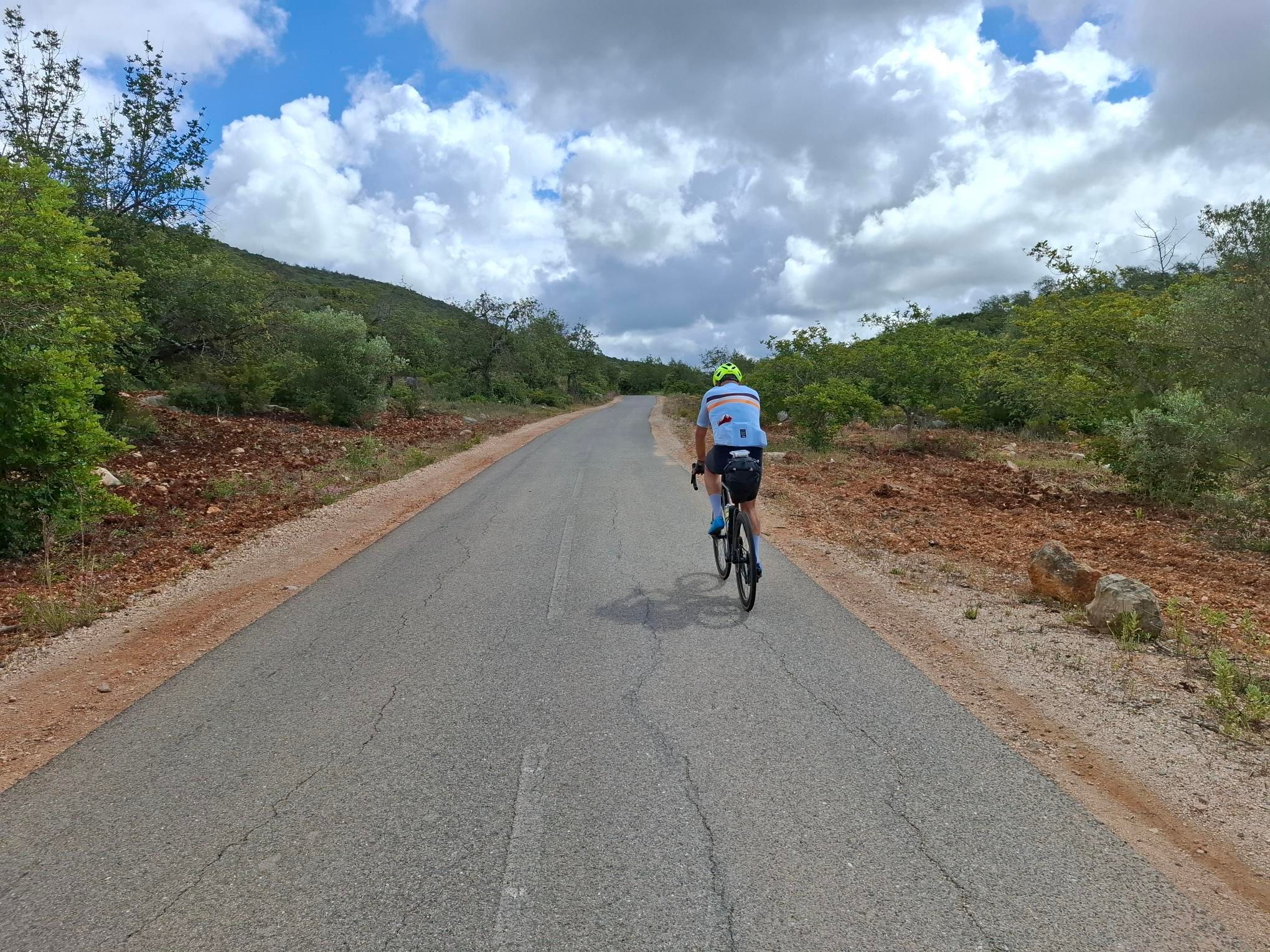
The roads quickly become quieter and can take you towards the lower slopes of Monchique, through smaller communities and across rolling countryside.
Why this makes a good half-day ride
You can get a surprising amount of variety without riding huge distances.
A route of 50–70 kilometres can include:
- quiet rural roads
- several proper climbs
- long descents
- village coffee stops
- views towards the mountains
- a return towards the coast
This is exactly the sort of route I like for riders who want a proper morning on the bike without committing to a full mountain day.
If you’re visiting the Algarve and only have limited time, a guided cycling experience with Ride With Pete can be built around your available hours and fitness rather than forcing you into a fixed itinerary.
5. The Serra do Caldeirão
The Serra do Caldeirão doesn’t receive the same attention as Monchique, but for serious road cyclists it contains some of the Algarve’s best riding.
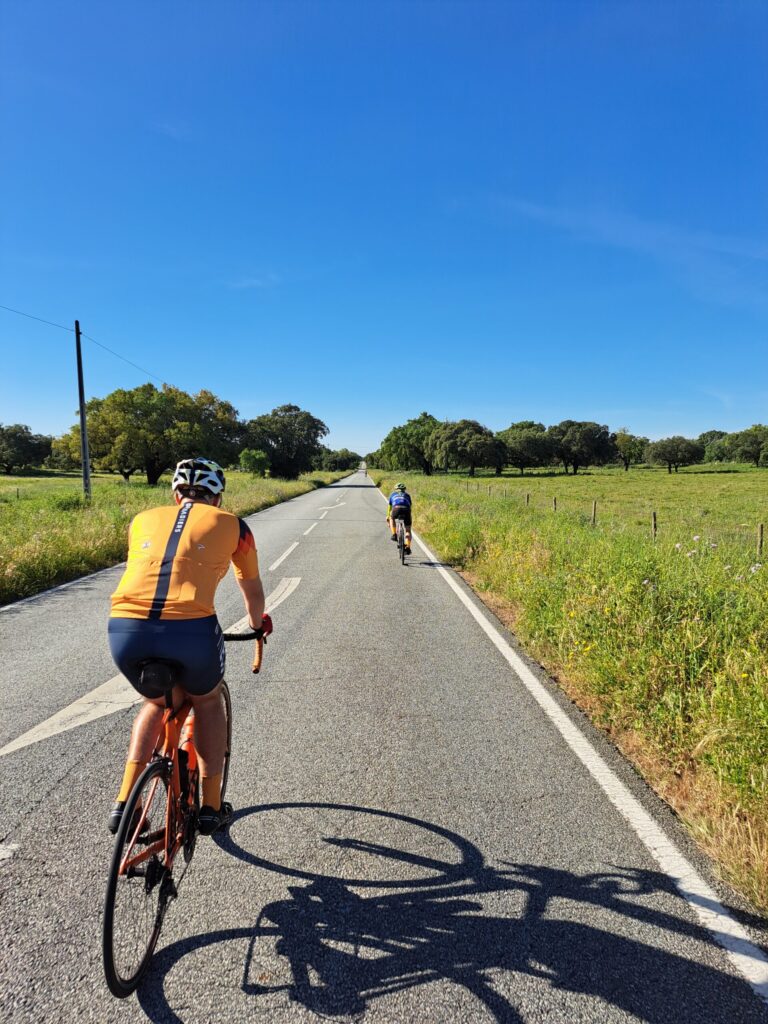
Stretching across the inland Algarve, this hilly region is characterised by cork oak forests, winding roads, small settlements and long stretches where traffic can be extremely light.
This is the Algarve many tourists never see.
Why cyclists should explore it
The roads seem almost designed for bikes.
There are long rolling sections, repeated climbs and descents, and very little of the stop-start riding you get in built-up coastal areas.
Some rides feel remote.
That’s part of the appeal, but it also means you should plan properly.
Make sure you have enough water, some food and basic mechanical equipment because cafés and shops can be much further apart than they are near the coast.
How difficult is it?
It can be very difficult if you want it to be.
The terrain constantly rises and falls.
You don’t necessarily climb to huge altitude, but repeated gradients can create substantial elevation gain over a full day.
For experienced riders looking for quiet roads and a serious workout, the Serra do Caldeirão deserves far more attention.
6. Tavira and the Eastern Algarve
Tavira provides a very different base from Lagos or Portimão.
The eastern Algarve tends to feel quieter and more traditional, particularly once you ride inland.
From Tavira you can build routes that stay relatively gentle near the coast or head north into hillier countryside.
Why I like eastern Algarve cycling
There’s a sense of space.
Roads can feel less developed, villages are quieter and you often spend long periods away from the main tourist areas.
The landscape also changes gradually as you move inland.
Nearer the coast, the riding can be relatively gentle.
Head north and the gradients begin to increase as you approach the Caldeirão hills.
This makes Tavira particularly useful for cyclists who want several different types of ride from one base.
7. Alcoutim and the Guadiana
For something completely different, head towards Portugal’s eastern border.
The Guadiana River separates Portugal from Spain and creates some beautiful riding in the far east of the Algarve.
Alcoutim is one of those places that feels much further from the coast than the map suggests.
It’s quiet, traditional and surrounded by hilly terrain.
What makes this ride special?
The views.
Roads around the Guadiana offer long stretches overlooking valleys, hills and the river itself.
Traffic can be extremely light and the whole area has a peaceful feeling that’s difficult to find in busier parts of southern Europe.
The terrain is rolling to hilly rather than mountainous, but don’t underestimate it.
Long distances here can still produce a demanding day.
For riders who enjoy exploring rather than ticking off famous climbs, this is one of the most rewarding parts of the Algarve.
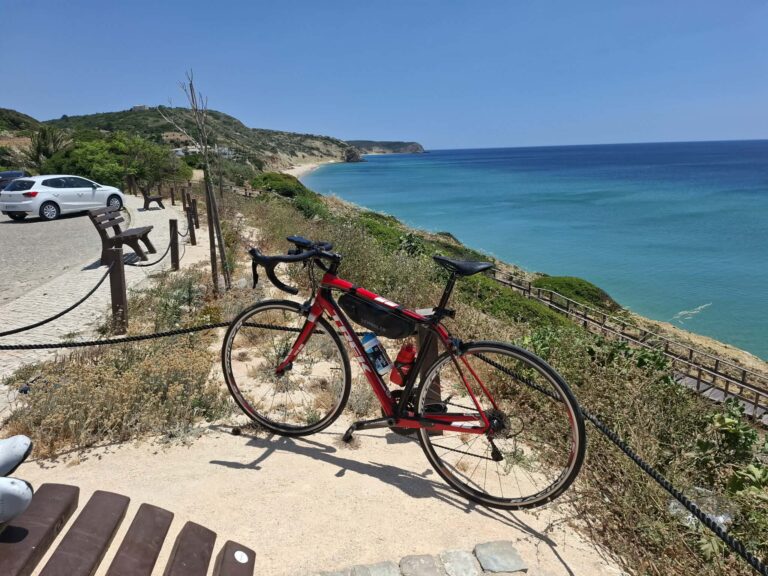
8. Coastal Cycling: Choose the Road Carefully
People naturally assume the best Algarve cycling routes run beside the sea.
Sometimes they do.
But not always.
Parts of the coastline are heavily developed and the main roads can carry significant traffic.
That’s particularly true during the busiest holiday periods.
The better coastal rides usually combine quieter sections near the sea with inland alternatives.
Don’t chase the coastline at all costs
This is one of the biggest route-planning mistakes visitors make.
They see the Atlantic on the map and try to stay as close to it as possible.
That can put you on roads that aren’t particularly enjoyable.
Sometimes moving five or ten kilometres inland gives you a far better ride.
You may temporarily lose the sea view, but you’ll gain quieter roads, better surfaces and much more enjoyable cycling.
Then you can reconnect with the coast later.
The best route isn’t always the one that looks prettiest on Google Maps.
9. The Western Algarve Coast and Sagres
The far western Algarve has a rawer character than the central resort areas.
Sagres and the surrounding coastline are exposed to the Atlantic, which creates dramatic scenery and a completely different riding atmosphere.
The wind matters
This is one area where I pay particular attention to the weather forecast.
Strong Atlantic winds can completely change the difficulty of a ride.
A route that feels easy in one direction can become a serious effort when you turn into a headwind.
On calmer days, though, the western roads can be fantastic.
Open landscapes, dramatic cliffs and the feeling of riding towards the edge of Europe make this part of the Algarve memorable.
Combine coast and inland roads
Again, I prefer combining sections rather than hugging the coastline for the entire ride.
Use the coast for the scenery and then turn inland for quieter, more sheltered riding.
That combination usually produces a much better day.
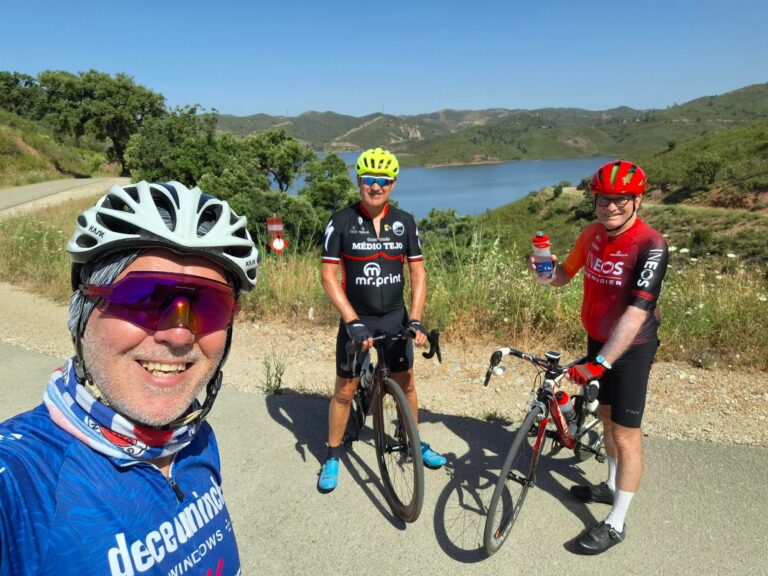
10. Reservoir Roads and Rural Algarve
Some of the Algarve’s nicest cycling isn’t associated with a famous town or mountain at all.
Reservoirs and rural roads inland can produce beautiful loops with very little traffic.
The landscape is different from the beaches people associate with the Algarve.
You’ll ride through farmland, cork trees, valleys and areas where tourism barely seems to exist.
These routes are particularly good in spring when the countryside is greener and temperatures are comfortable.
Why these rides matter
They show you Portugal rather than simply the tourist version of Portugal.
You might pass a shepherd, see farmers working beside the road or stop at a café where nobody speaks much English.
Those experiences often become the parts of the ride people remember.
The kilometre count gets forgotten.
The little village where you stopped for coffee doesn’t.
How Long Should an Algarve Cycling Route Be?
There’s no magic distance.
A good route should match the rider.
For some people, 40 kilometres with a coffee stop and a few hills makes a perfect holiday ride.
For others, the day doesn’t really start until they’ve passed 100 kilometres.
Both are valid.
Short rides: 30–50 km
Ideal for:
- newer cyclists
- summer mornings
- families
- recovery days
- visitors combining cycling with other activities
These rides can still include beautiful countryside and proper climbs.
Medium rides: 50–80 km
This is probably the sweet spot for many visiting cyclists.
It’s enough distance to explore properly without making every ride exhausting.
You can include several climbs, scenic roads and a relaxed café stop while still returning with plenty of the day left.
Long rides: 80–120+ km
For experienced cyclists, the Algarve can deliver excellent full-day rides.
Once you’re covering these distances, route planning becomes even more important.
A poorly chosen road can spoil a big section of the day, while a well-designed route can give you hours of fantastic riding.
This is also where the amount of climbing starts to matter.
An 80-kilometre Algarve ride with 1,500 metres of elevation can feel much harder than a flat 120-kilometre route elsewhere.
How Much Climbing Should You Expect?
More than many visitors imagine.
Even outside the mountains, the Algarve tends to roll.
Short climbs accumulate.
You may climb for two kilometres, descend, roll through a valley and then immediately start climbing again.
If you’re planning routes using an app, always check the elevation rather than looking only at distance.
A route that’s perfect for a strong club cyclist may be far too demanding for someone who normally rides flatter terrain.
That’s one of the reasons I don’t believe in one-size-fits-all routes.
Good guiding is about matching the route to the people riding it.
The Importance of Coffee Stops
This deserves its own section because, in Portugal, the coffee stop isn’t an afterthought.
It’s part of the route.
When I’m planning a ride, I like knowing where we can stop.
A good café gives riders a chance to refill bottles, eat something, use the toilet and relax for a few minutes.
It also turns the ride into an experience rather than simply exercise.
Some of the best cafés aren’t fashionable cycling cafés with expensive branding.
They’re ordinary Portuguese places in small towns and villages.
You pull up, lean the bikes against a wall, order coffee and something to eat and sit outside for twenty minutes.
That’s Algarve cycling.
Should You Follow Routes From Strava or Komoot?
They can be useful.
They’re also not perfect.
A route being popular doesn’t automatically mean it’s the best route for you.
It might have been created for a race.
It might include a road that’s now busier than it was several years ago.
It might use surfaces that aren’t suitable for your bike.
Or the person who created it may simply have different preferences.
Use online route tools as inspiration, but look carefully at:
- road type
- gradients
- surface
- traffic
- recent rider comments
- water and food stops
- your own fitness
And remember that local knowledge still matters.
I’ve ridden roads here that look excellent on a map but I wouldn’t recommend to visitors.
I’ve also ridden tiny roads that barely register online but are absolutely fantastic.
Guided Routes Versus Exploring Alone
There is something brilliant about taking a map and heading out to explore.
If you’re confident navigating and enjoy route planning, you can have an excellent self-guided cycling holiday in the Algarve.
But guided riding gives you something different.
You don’t need to spend the night before studying junctions.
You don’t need to worry about whether a particular road is busy.
You don’t need to find the café.
You just ride.
A local guide can also adapt the route during the day.
If everyone is feeling good, we can extend it.
If the heat is building or somebody is struggling, we can shorten it.
If the wind is stronger than expected, we can change direction.
That’s difficult to do when you’re simply following a downloaded GPX file.
Our guided Algarve cycling rides are deliberately flexible for that reason.
The route serves the riders, not the other way round.
What Is the Best Algarve Cycling Route?
I get asked this, and I don’t really have one answer.
If you love climbing, I’d send you towards Monchique.
If you want long quiet roads and serious rolling terrain, I’d look towards the Serra do Caldeirão.
If you want a scenic half-day ride, there are fantastic options inland from Portimão, Lagos or Silves.
If you want peace and exploration, I’d consider Tavira, Alcoutim and the eastern Algarve.
The best route depends on:
- where you’re staying
- how far you want to ride
- how much climbing you enjoy
- the weather
- the wind
- the time of year
- who you’re riding with
That’s why I prefer talking to riders first.
Tell me what you normally ride at home and what you want from the day, and I can usually picture the type of Algarve route that’s going to suit you.
Building an Algarve Cycling Holiday Around Different Routes
If you’re visiting for several days, don’t make every ride the same.
I’d much rather give someone variety.
For example:
Day one: a relaxed rolling ride to settle into the Algarve.
Day two: a proper climbing day towards Monchique.
Day three: an easier scenic ride with a long coffee stop.
Day four: a longer inland route through quiet countryside.
That allows your legs to recover and lets you experience different parts of the region.
It also prevents the holiday becoming a training camp unless that’s specifically what you want.
The Algarve is too interesting to spend every day staring at your power meter.
From Algarve Day Rides to the N2
If you enjoy longer challenges, Algarve riding can be the perfect introduction to cycling elsewhere in Portugal.
The biggest journey we offer is the Portugal N2 guided cycling tour.
It runs from Chaves in northern Portugal all the way to Faro, covering approximately 741 kilometres over seven riding days.
The N2 is very different from staying in one Algarve base.
You’re travelling through the whole country, watching the landscape, food and culture change as you move south.
But the things that make our Algarve rides enjoyable are the same things that make the N2 special:
- small groups
- quiet roads
- local cafés
- authentic food
- good company
- routes chosen for cycling rather than simply convenience
For riders who eventually want to tackle the N2, spending a few days cycling in the Algarve is also a good way to experience Portuguese roads before committing to the full journey.
Discover the Algarve by Bike
The Algarve’s best cycling routes aren’t confined to one mountain, one town or one section of coastline.
They’re spread across the region.
Some are famous.
Many aren’t.
That’s what keeps riding here interesting.
Even after years of cycling in southern Portugal, I can still turn onto a road I’ve never ridden before and discover another climb, another village or another view worth coming back for.
If you’re visiting with your own bike, don’t be afraid to explore beyond the obvious coastal roads.
Head inland.
Look towards the hills.
Slow down when you reach a village.
Stop for coffee.
And don’t judge the quality of your ride by average speed alone.
If you’d rather have the route planning taken care of, take a look at our Algarve cycling tours and guided rides.
You can also get in touch with Ride With Pete and tell me where you’re staying, your normal riding distance and how much climbing you enjoy.
I’ll always prefer recommending the right ride for you rather than simply pointing everybody towards the same route.
That’s the beauty of cycling in the Algarve.
There are far too many good roads for just one.