Cycling in the Algarve: The Complete Guide for Road Cyclists
If Cycling in the Algarve: The Complete Guide for Road Cyclists
If you’re looking for one of Europe’s best road cycling destinations, cycling in the Algarve deserves a place near the top of your list.
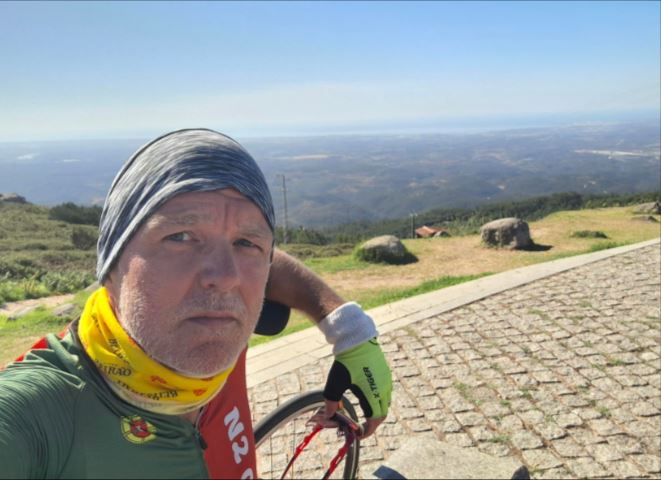
Portugal’s southern coast is best known for beaches, sunshine and golf, but cyclists discover a very different side of the region. Head just a few kilometres inland and the busy resort areas quickly give way to quiet roads, rolling countryside, whitewashed villages, orange groves, cork forests and proper mountain climbs.
Having lived in Portugal since 2006, I’ve spent years riding these roads. Some of my favourite routes aren’t the famous ones you’ll find on every cycling website. They’re the roads that disappear into the hills, pass through small villages and lead to cafés where the coffee is strong, the cakes are cheap and cyclists are always welcome.
The Algarve is also one of those rare destinations where you can genuinely ride for most of the year. Spring and autumn are superb, winter can offer excellent cycling conditions, and even summer can work well if you’re prepared to ride early.
Whether you’re an experienced road cyclist looking for challenging climbs, a recreational rider wanting quiet scenic roads, or someone planning a full Algarve cycling holiday, this guide will help you understand what riding here is really like.
Why Is Cycling in the Algarve So Good?
The Algarve has a combination of qualities that are surprisingly difficult to find together.
Some European cycling destinations have spectacular mountains but unpredictable weather. Others have sunshine but busy roads. Some offer great riding for only a few months of the year.
The Algarve manages to combine excellent weather, varied terrain, quiet inland roads, welcoming cafés, beautiful scenery and a very long cycling season.
And importantly, you don’t need to be an elite cyclist to enjoy it.
There are hard rides if you want them, but there are also plenty of gentler routes where the focus is on scenery, good company and enjoying Portugal at a slower pace.
Quiet roads just beyond the coast
One of the biggest surprises for first-time visitors is how quickly the traffic disappears.
The Algarve’s main coastal roads can be busy, particularly during the summer months, but move inland and the experience changes completely.
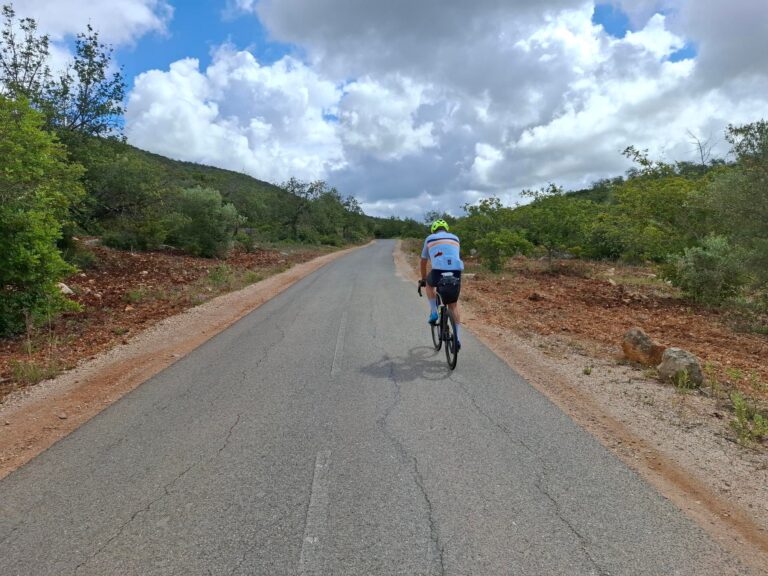
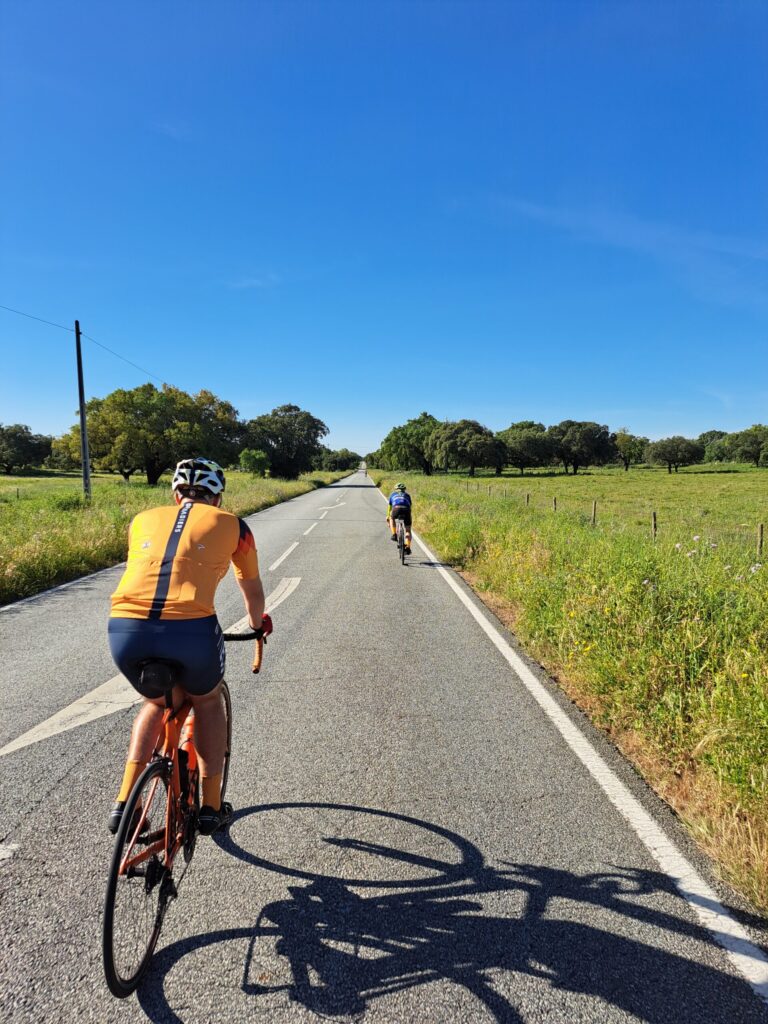
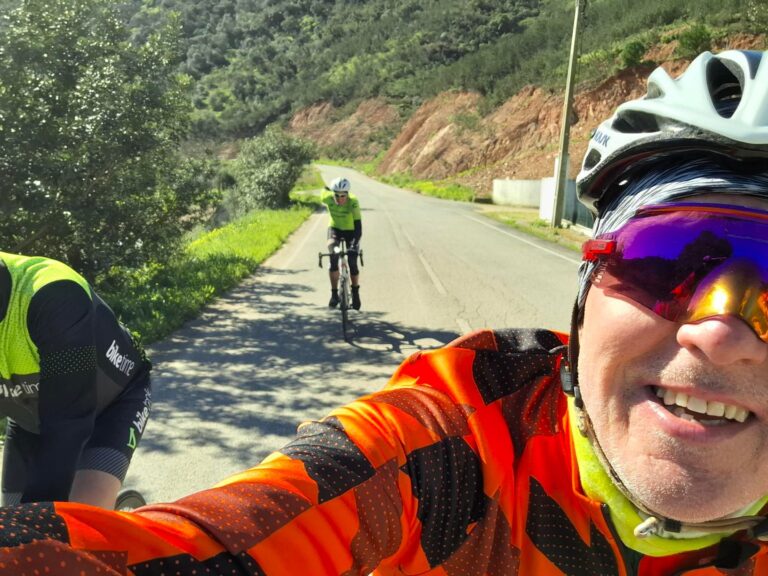
Small roads connect villages that most tourists never visit. You can ride through valleys, farmland, orange groves and cork forests with very little traffic.
For me, this is what makes road cycling in the Algarve special.
It’s not simply about finding one famous climb or one bucket-list route. It’s about being able to spend hours exploring roads where the riding itself is enjoyable.
Varied terrain
The Algarve is definitely not flat.
The coastline can give that impression, but the land rises quickly as you move north.
In the western Algarve, the Monchique mountains provide some of the region’s most famous climbing. Further east, the Serra do Caldeirão creates a huge network of rolling and mountainous roads.
Between those areas are countless shorter climbs, rolling sections and long descents.
That variety means you can plan very different rides from one day to the next.
A climate made for cycling
Weather is one of the Algarve’s biggest advantages.
Northern European cyclists often have to accept months of cold, wet and dark conditions. Here, winter regularly produces bright, clear days when riding in shorts and a light layer is perfectly comfortable once the day warms up.
Spring and autumn are particularly good.
Temperatures are generally comfortable, the countryside looks fantastic and there is enough daylight for long rides without the intense heat of high summer.
Portuguese café culture
Any guide to cycling in Portugal that ignores coffee stops is missing half the experience.
Stopping at a village café is part of the ride.
You can sit outside with an espresso, a pastel de nata or a sandwich, watch local life go by and then get back on the bike.
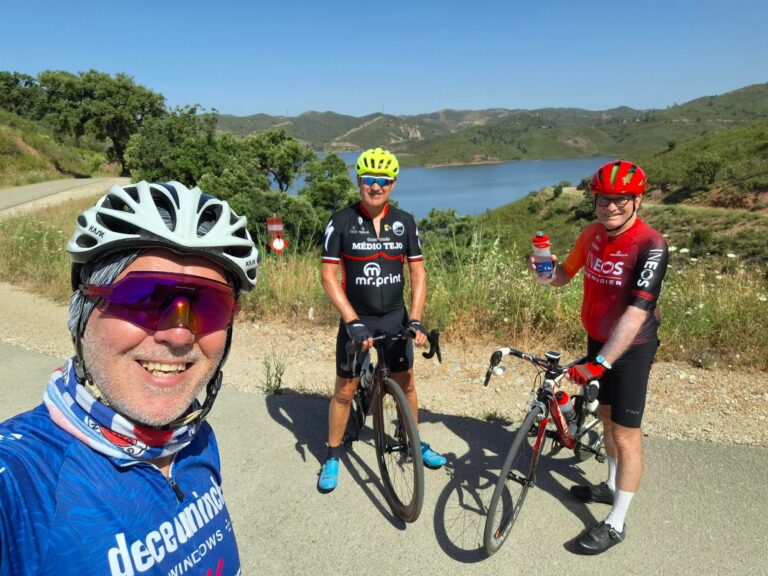
These stops are one of the things I enjoy most when taking riders around the Algarve.
They break up the day, give everyone a chance to chat and make the ride feel like part of a holiday rather than a training session.
If you’re interested in seeing the region with someone who knows these roads, our guided cycling experiences in the Algarve are built around exactly this style of riding: quiet roads, local stops and routes matched to the group.
When Is the Best Time to Cycle in the Algarve?
One of the most common questions from visiting riders is when they should come.
There isn’t one perfect answer because it depends on what you want from your trip.
Spring: March to May
Spring is one of my favourite times for cycling in the Algarve.
The countryside is green, wildflowers are out and temperatures are usually ideal for longer rides.
March can still bring occasional unsettled weather, but by April and May conditions are often excellent.
You can expect warm days without the more intense heat of summer.
For riders planning an Algarve cycling holiday with plenty of distance and climbing, this is one of the best periods of the year.
Summer: June to August
Summer riding is possible, but timing matters.
July and August can get very hot, particularly inland and on exposed climbs.
If you’re here during the summer, the best approach is usually to start early.
A ride beginning around sunrise can give you several excellent hours on the bike before the heat becomes uncomfortable.
Shorter morning rides can work very well, followed by lunch and an afternoon by the pool or beach.
I wouldn’t normally choose the hottest part of August for a week of hard road cycling, but that doesn’t mean cycling stops completely.
You simply adapt the ride to the conditions.
Autumn: September to November
Autumn is another excellent period.
September can still be warm, but temperatures gradually become more comfortable as the month progresses.
October is often superb.
The roads are quieter after the main summer holiday period, the weather is generally pleasant and the days are still long enough for serious rides.
November can also deliver some fantastic cycling, although the chance of rain naturally increases.
Winter: December to February
Winter is one of the Algarve’s greatest advantages as a cycling destination.
No, every day isn’t guaranteed to be sunny.
We do get rain and occasional colder spells.
But compared with much of northern Europe, the number of rideable days is impressive.
That’s why the Algarve works so well for cyclists looking for a winter escape.
A clear January morning here can produce some of the best riding of the year: cool air, almost empty roads and bright sunshine.
It’s one of the reasons I think the Algarve deserves far more recognition as a winter road cycling destination.
The Best Areas for Cycling in the Algarve
The Algarve isn’t one uniform cycling region.
The riding changes considerably depending on where you are.
Western Algarve
The western Algarve is where you’ll find some of the most dramatic scenery and famous climbs.
Lagos, Portimão, Silves and Monchique all provide access to excellent riding.
The Monchique mountains dominate the landscape inland.
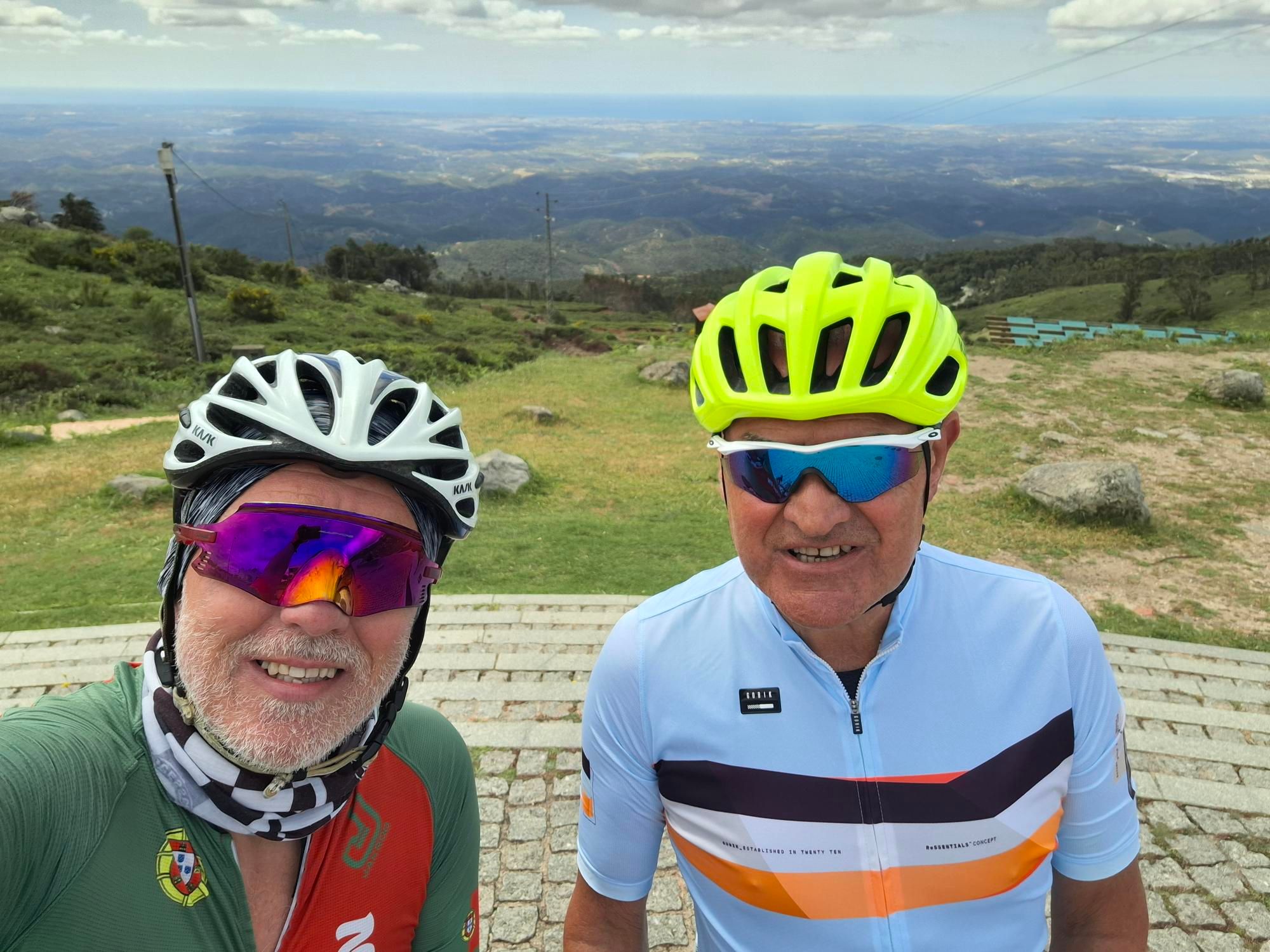
The best-known destination is Fóia, the highest point in the Algarve at 902 metres.
There are several ways to approach the mountain, and each gives you a different ride.
The climb can be demanding, particularly on a warm day, but the views make it worthwhile.
You don’t need to ride all the way to the summit to enjoy the area either.
The roads around Monchique offer a huge variety of climbing and descending through wooded hills and valleys.
Central Algarve
The central Algarve gives you an excellent mix of inland countryside and access to the coast.
Move away from the busier areas around the main towns and there are countless rural roads to explore.
This is a good part of the Algarve for riders who want rolling terrain without necessarily spending the entire day climbing mountains.
It’s also easy to build routes of very different lengths, which makes it suitable for mixed-ability groups.
Eastern Algarve
The eastern Algarve has a completely different character.
Areas around Tavira and the Spanish border tend to feel quieter and less developed than some of the western coastal resorts.
Ride inland and you’ll find rolling countryside, small villages and the lower reaches of the Serra do Caldeirão.
There are plenty of challenging roads if you head north, but also gentler options closer to the coast.
For riders who enjoy exploring and getting away from busy tourist areas, eastern Algarve cycling is well worth considering.
How Difficult Is Cycling in the Algarve?
That depends entirely on the route.
One mistake people make is assuming the Algarve is flat because it’s a coastal destination.
It isn’t.
You can certainly plan easier rides, but many routes involve constant rolling terrain.
A day that looks relatively simple on a map can still accumulate a surprising amount of climbing.
Beginners and recreational riders
If you’re relatively new to road cycling, the Algarve can still be an excellent destination.
The key is choosing the right roads.
You don’t need to ride Fóia or spend six hours in the Serra do Caldeirão.
There are plenty of enjoyable routes with manageable climbs, café stops and opportunities to shorten the ride if necessary.
That’s one of the advantages of riding with local knowledge.
Rather than simply following a GPX file designed for experienced cyclists, the route can be adapted to suit the riders.
Experienced cyclists
If you want a challenge, you won’t struggle to find one.
Long mountain rides, repeated climbs and substantial elevation gains are all possible.
You can easily build a day with well over 1,500 metres of climbing, and much more if that’s what you’re looking for.
The Algarve rewards strong riders because many climbs lead directly into long descents and then immediately into another section of rolling terrain.
It’s possible to put together some genuinely hard days here.
Don’t obsess over average speed
One thing I always tell visiting riders is not to judge an Algarve ride purely by average speed.
The combination of climbing, descending, small roads, junctions and coffee stops means your speed may be lower than on a flat home route.
That’s fine.
You’re here to experience the Algarve, not set a Strava record.
The Roads Most Visitors Never Discover
This is where local knowledge really changes the experience.
Visitors naturally search online for the biggest climbs and most famous routes.
There’s nothing wrong with that.
But some of my favourite Algarve roads don’t have famous names.
They’re small roads through villages, valleys and hills that you would probably never choose by looking at Google Maps alone.
A road might look insignificant on the map but turn out to be perfect: smooth surface, almost no traffic and beautiful scenery.
Another road might look ideal online but be unpleasantly busy.
That’s something you only really learn by riding here regularly.
I’ve spent years exploring these roads, trying different combinations and discovering which routes work at different times of year.
That’s why our Algarve cycling rides and tours aren’t based around simply downloading a popular route.
The aim is to give riders the roads I’d choose to ride myself.
Guided or Self-Guided Cycling in the Algarve?
Both can work very well.
Which is best depends on the type of cycling holiday you want.
Self-guided cycling
If you’re confident navigating, comfortable dealing with mechanical problems and enjoy planning routes, riding independently gives you complete freedom.
There are plenty of mapping tools available and the Algarve is relatively easy to explore.
However, route planning isn’t always as simple as choosing the quietest-looking road on a map.
Some roads that appear ideal can be busy or poorly surfaced.
Other excellent roads can be surprisingly difficult to find unless you already know they exist.
Guided cycling
A guide removes most of that uncertainty.
You don’t need to worry about navigation, finding the best café stop or deciding whether a road is suitable.
You also have someone who can adapt the route if the weather changes, someone in the group is struggling or everybody is feeling stronger than expected.
For me, that’s the biggest benefit of guided cycling.
It isn’t simply having someone ride at the front.
It’s having someone who understands the area and can make the day work for the people actually riding it.
If you’re visiting the Algarve and would rather spend your time riding than planning, you can see our guided Algarve cycling options here.
What Type of Bike Is Best for the Algarve?
For most of the rides I do, a road bike is ideal.
Road bikes
A modern endurance road bike is probably the best all-round choice.
You don’t need an aggressive race bike.
Comfort matters when you’re spending several hours riding over rolling terrain.
Gearing is more important than aerodynamics.
Compact or semi-compact gearing with a sensible cassette will make the climbing much more enjoyable.
There’s absolutely no prize for struggling up a climb in the wrong gear.
Gravel bikes
Gravel bikes can also work very well.
There are plenty of unpaved tracks and quieter back roads around the Algarve, although our main guided road rides stay predominantly on tarmac.
If you enjoy mixing surfaces, a gravel bike opens up even more possibilities.
E-bikes
E-bikes have transformed cycling holidays for many people.
They allow couples and friends with different fitness levels to ride together and make hilly terrain much more accessible.
There’s no reason an e-bike rider can’t enjoy the Algarve.
The important thing is having sufficient battery range for the planned ride and understanding how to manage the assistance levels.
What Should You Bring for Cycling in the Algarve?
You don’t need anything unusual, but a little preparation makes the trip much easier.
A good-quality helmet should be obvious.
I also recommend front and rear lights even during the day.
Bright clothing and visible lights make sense wherever you ride.
Bring clothing that can be layered.
Even if the forecast looks warm, mornings in the hills can be considerably cooler than the coast.
A lightweight windproof layer is particularly useful on long descents.
For longer rides, carry basic spares including an inner tube or tubeless repair kit, tyre levers and whatever tools your particular bike requires.
And don’t underestimate hydration.
Even outside summer, strong Algarve sunshine can make you drink more than you expect.
One or two bottles should always be on the bike, and regular café stops give you plenty of opportunities to refill.
Cycling, Food and the Algarve
For me, food is part of the cycling experience.
Portugal works brilliantly for this because you don’t have to go looking for expensive specialist cycling cafés.
Ordinary local cafés do the job perfectly.
An espresso is quick, cheap and available almost everywhere.
You’ll find pastries, sandwiches, cakes and simple meals without needing to plan every stop in advance.
Long rides also give you an excuse to enjoy proper Portuguese food afterwards.
Grilled fish, chicken piri-piri, regional meat dishes, soups and fresh bread all taste considerably better after you’ve spent several hours on the bike.
This is one reason I don’t want Ride With Pete rides to feel like organised training camps.
Yes, the cycling matters.
But so do the cafés, the conversations, the views and the food afterwards.
You’re in Portugal. You should experience Portugal.
Is Cycling in the Algarve Safe?
Generally, yes, particularly if you choose your roads carefully.
Like anywhere, there are roads I’d rather avoid.
The main N125 coastal road, for example, isn’t somewhere I’d choose for a relaxed recreational ride when quieter alternatives exist.
The difference between an enjoyable Algarve route and an unpleasant one often comes down to road choice.
Once you’re inland, traffic levels can become remarkably low.
Portuguese drivers are used to cyclists in many areas, although normal road awareness is still essential.
Ride predictably, use lights, follow traffic rules and avoid unnecessary exposure to major roads.
That’s the same advice I’d give anywhere.
What Makes a Good Algarve Cycling Holiday?
For me, it isn’t simply the number of kilometres ridden.
A good cycling holiday needs balance.
You want enough riding to feel satisfied at the end of the day, but you also want time to enjoy where you are.
That might mean stopping for coffee in a village, taking a few minutes at a viewpoint or sitting down for lunch rather than eating an energy bar beside the road.
If you’re visiting with friends or a partner, the social side matters too.
Some of the best moments happen after the bikes are parked.
That’s why I prefer small groups.
With fewer riders, it’s easier to adapt the day, keep everyone together and create a relaxed atmosphere.
It feels more like riding with a group of friends than being processed through a commercial cycling itinerary.
The Biggest Mistake First-Time Cyclists Make in the Algarve
It’s trying to do too much.
I understand why.
You arrive, see the sunshine, look at the map and suddenly want to ride every famous road in three days.
But the Algarve is better when you give yourself time.
Don’t make every ride a race.
Don’t choose a route simply because it has the biggest elevation number.
And don’t ride straight past every village café because you want to improve your average speed.
Some of the best memories from cycling holidays have nothing to do with performance.
They’re the unexpected roads, the views you weren’t expecting and the café stop that lasted twenty minutes longer than planned.
From Algarve Roads to Portugal’s N2
For some riders, cycling in the Algarve is the start of something bigger.
Once you’ve experienced Portuguese roads and the cycling culture here, the obvious next challenge is the country’s legendary N2.
The Estrada Nacional 2 runs the length of Portugal from Chaves in the north to Faro in the south.
Our guided Portugal N2 cycling tour covers approximately 741 kilometres over seven riding days and gives riders the chance to experience how dramatically Portugal changes from north to south.
It’s a very different experience from a day ride in the Algarve, but the same philosophy applies: small groups, proper support, local food, good company and enough time to enjoy the journey.
If the N2 is on your cycling bucket list, it’s worth taking a look.
Is the Algarve Right for Your Next Cycling Holiday?
If you want sunshine, quiet roads, varied terrain and a cycling season that extends far beyond the traditional European summer, the Algarve is difficult to beat.
You can make the riding as easy or as difficult as you want.
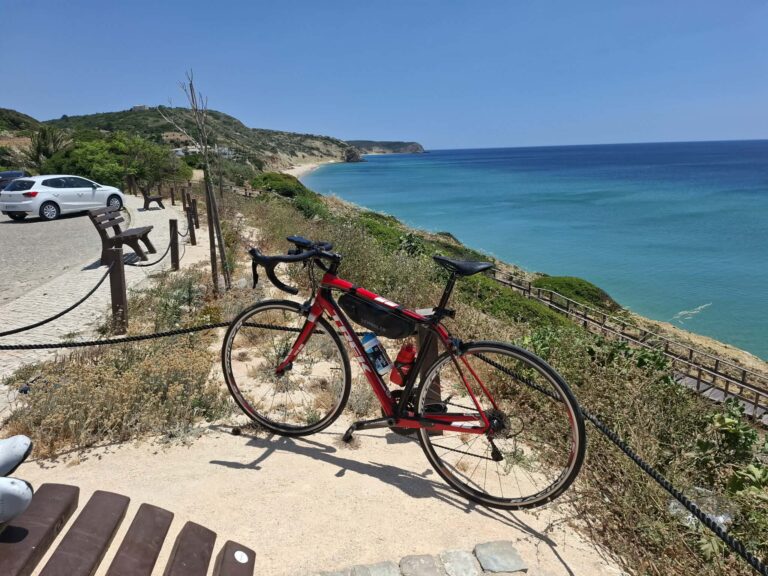
You can chase mountain climbs, spend the day rolling through countryside or combine cycling with good food, coffee stops and time by the coast.
The region’s biggest strength isn’t one famous climb or one famous route.
It’s the sheer variety.
After living and cycling here for years, I still find roads that make me think, I’ve got to bring people back here.
That’s what keeps the Algarve interesting.
And it’s why I think cyclists who only know this part of Portugal for its beaches are missing something special.
If you’re planning a trip and would like someone else to take care of the route planning, you can explore our guided cycling experiences in the Algarve.
And if you’re not sure which ride would suit you, simply visit Ride With Pete and get in touch. Tell me what sort of cycling you enjoy, your usual distances and how much climbing you like, and we can work out a ride that fits.
The Algarve has a lot more to offer cyclists than most people realise.
Sometimes you just need to know which road to take.