Best Time to Cycle in Portugal: Month-by-Month Guide
The best time to cycle in Portugal depends almost as much on where you’re riding as when you visit.
Portugal may be a relatively small country, but cycling conditions can be dramatically different between the green north, the mountainous interior, the vast plains of the Alentejo and the Algarve in the south.
There isn’t one perfect cycling month for every part of Portugal.
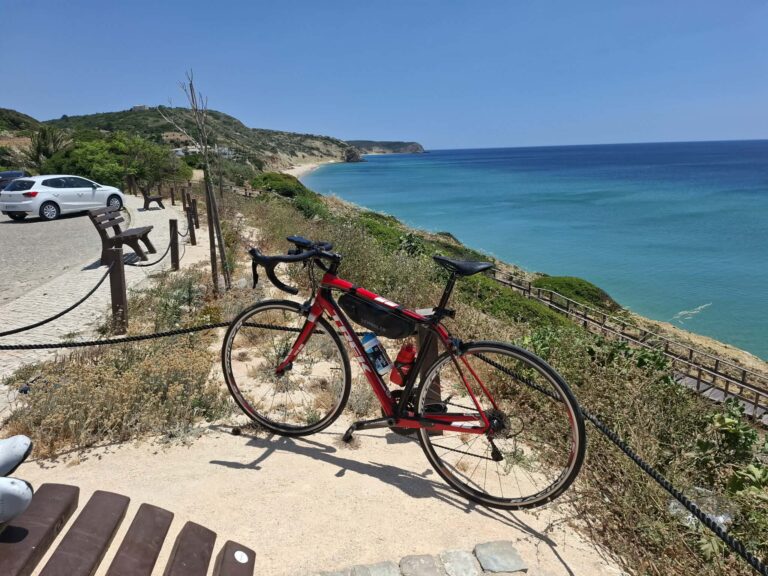
For much of the country, spring and autumn offer the best overall conditions. But here in the Algarve, cycling can be excellent when northern Europe is deep in winter.
Here’s what to expect throughout the year.
January – Escape Winter in the Algarve
If you’re looking for serious winter sunshine, southern Portugal is the place to be.
January in northern and central Portugal can be cold and wet, particularly at altitude. The Algarve is generally milder and often provides some excellent cycling days.
That doesn’t mean guaranteed sunshine. This is still winter and Atlantic weather systems can bring rain and strong winds.
But between them, you can get beautiful clear days that are ideal for cycling.
Another advantage?
Very little heat.
Long climbs that would be uncomfortable during summer become much more enjoyable.
Best for: Algarve cycling and winter training.
February – Quiet Roads and Early Signs of Spring
February remains unpredictable across much of Portugal, but the Algarve often starts providing increasingly good riding opportunities.
The days are getting longer, roads remain relatively quiet and daytime temperatures can be very comfortable when the sun appears.
Northern Portugal is still considerably wetter and cooler.
For cyclists escaping a northern European winter, however, February in southern Portugal can feel like somebody has fast-forwarded the calendar.
Best for: Algarve road cycling and cyclists who prefer cooler temperatures.
March – Portugal Starts Waking Up
March is when cycling possibilities begin expanding.
Temperatures rise, daylight increases and spring starts transforming the countryside.
Rain is still possible almost anywhere, but there are increasingly long periods of excellent riding weather.
In southern Portugal, wildflowers and green landscapes can make this a particularly attractive time to explore by bicycle.
Best for: Algarve, Alentejo and increasingly central Portugal.
April – One of Portugal’s Best Cycling Months
April is one of my favourite months for cycling in Portugal.
Temperatures are usually far more comfortable than summer, the countryside is green and you have enough daylight for substantial days on the bike.
It’s also a very good month for multi-day cycling trips.
Weather systems can still bring rain, particularly further north, so don’t assume every day will be dry.
But if I were choosing a month to explore a large part of Portugal by bicycle, April would be high on the list.
Best for: Touring, road cycling and multi-day adventures across Portugal.
May – Possibly the Sweet Spot
May has a strong claim to being the best all-round month for cycling in Portugal.
Days are longer.
Temperatures are warmer.
Rainfall generally becomes less troublesome.
And in most regions, you haven’t yet reached the intense heat that can make summer cycling difficult.
It’s particularly good for cyclists planning long days or crossing different regions of Portugal.
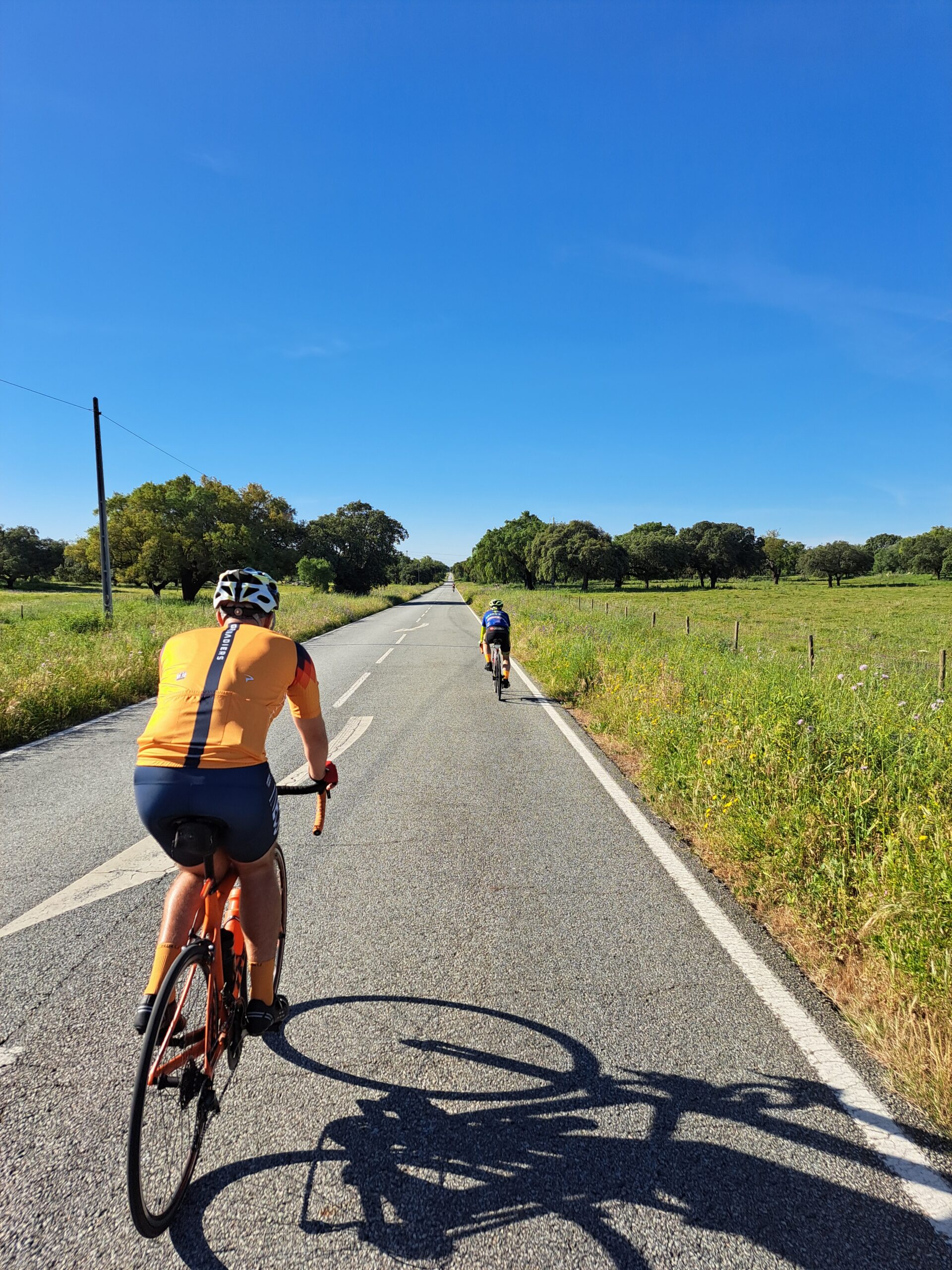
May is also one of our preferred periods for riding the N2 from north to south.
Best for: Almost every type of cycling holiday in Portugal.
June – Excellent, But Getting Hotter
June can provide superb riding conditions, particularly earlier in the month.
Long daylight hours give you enormous flexibility.
The problem is heat.
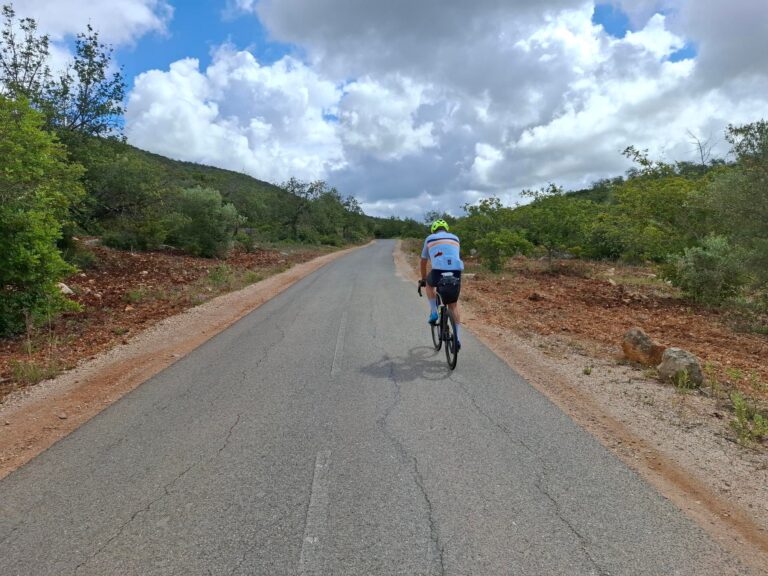
As summer develops, inland areas such as the Alentejo can become very hot. That increasingly changes how you need to plan your day.
Starting early becomes important.
So does carrying enough water.
Coastal areas can be noticeably cooler than inland Portugal.
Best for: Early starts, coastal routes and riders comfortable in warmer conditions.
July – Choose Your Location Carefully
July isn’t automatically a bad month for cycling in Portugal.
But I wouldn’t choose it for a long inland cycling tour.
Temperatures in the interior can become extremely high, particularly during heatwaves.
If you’re riding, early morning is your friend.
Get out while temperatures are manageable and avoid turning the hottest part of the afternoon into an endurance contest.
Coastal routes can be more comfortable thanks to Atlantic influence and sea breezes.
Best for: Early-morning and coastal cycling.
August – Heat Becomes the Main Consideration
August presents many of the same issues as July, often with even greater heat and busier tourist areas.
For casual holiday cycling, an early morning ride can still be fantastic.
For repeated 100 km days through inland Portugal?
There are much better times of year.
If you do ride during August, hydration and heat management need to be taken seriously.
Best for: Shorter early rides, particularly near the coast.
September – Excellent Cycling Returns
September is another of Portugal’s great cycling months.
The intense summer heat gradually begins to ease while the days remain long enough for substantial rides.
Early September can still be very hot inland, but conditions generally become more cycling-friendly as the month progresses.
The landscape will look considerably drier than it does in spring, particularly across southern Portugal, but the riding can be superb.
Best for: Road cycling, touring and longer-distance rides.
October – Cooler and Often Excellent
October is one of my favourite times to be on a bike in southern Portugal.
Temperatures are generally much more comfortable and the roads become quieter as the main tourist season fades.
The trade-off is increasing weather uncertainty.
Atlantic systems become more influential as autumn progresses, bringing a greater possibility of rain and stronger winds.
That makes October less predictable than May, but when conditions are good, they can be very good indeed.
Best for: Algarve, Alentejo and autumn cycling holidays.
November – Head South
By November, the difference between northern and southern Portugal becomes increasingly important.
Northern Portugal generally becomes wetter and cooler.
The Algarve can still produce some beautiful cycling weather.
Days are shorter, so there’s less room for leisurely late starts on long rides, but temperatures are usually comfortable.
For cyclists wanting to escape increasingly miserable weather elsewhere in Europe, southern Portugal becomes particularly attractive again.
Best for: Algarve cycling.
December – Winter Cycling Without the Deep Freeze
December brings us back to where we started.
Winter.
But winter in the Algarve is rather different from winter in much of Europe.
You can certainly get rain, wind and cold mornings.
You can also find yourself cycling under blue skies in temperatures that feel remarkably pleasant for December.
The shorter days make this better suited to day rides than major touring adventures.
But if the alternative is an indoor trainer while rain hits the window back home, I know which I’d choose.
Best for: Algarve cycling and winter escapes.
Spring or Autumn: Which Is Better?
If you’re planning a longer cycling holiday through Portugal, I’d give spring a slight advantage.
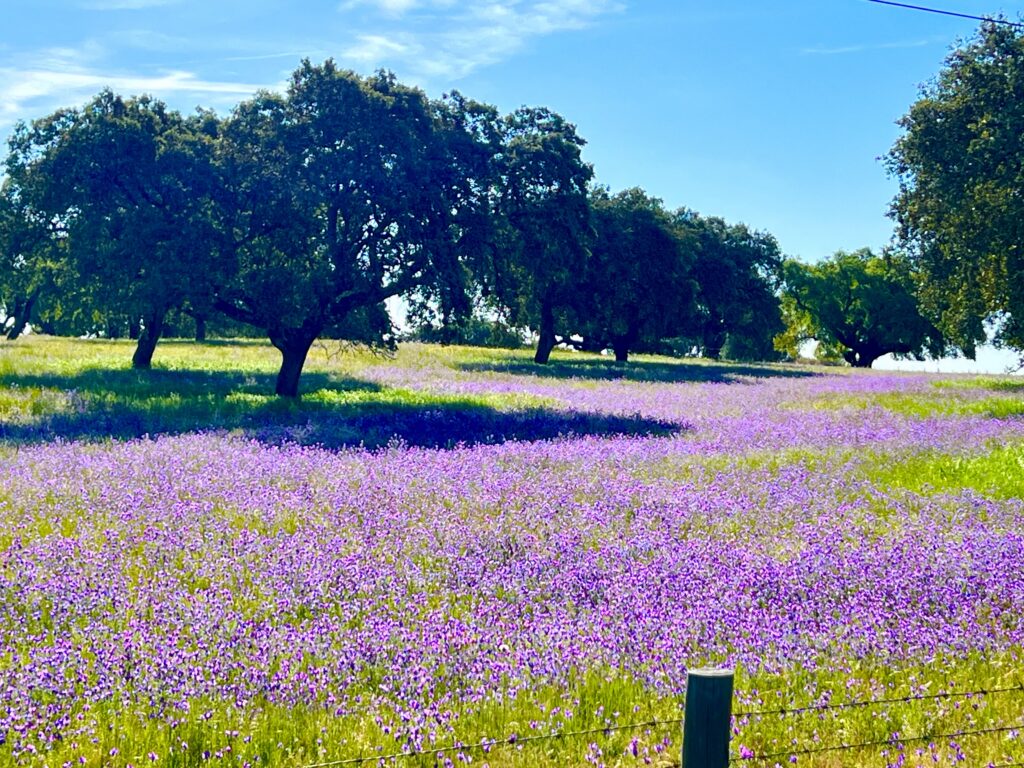
April and May combine moderate temperatures, long enough days and beautiful green landscapes.
Spring can also offer favourable prevailing wind conditions for cyclists travelling north to south, although no wind direction is ever guaranteed.
September and October are excellent alternatives.
Temperatures begin falling after summer, accommodation can be easier than during peak season and the roads are generally pleasant.
The biggest difference visually is the countryside.
Spring Portugal is green.
Early autumn Portugal is much drier.
Both have their appeal.
What About Cycling the Algarve?
The Algarve deserves to be treated slightly differently from Portugal as a whole.
Its southern location and relatively mild winters mean the cycling season is much longer.
For recreational road cycling, I’d particularly look at:
February to May and late September through November.
Winter can also produce excellent days.
Summer is perfectly possible for shorter rides if you start early, but long inland rides become less attractive once temperatures climb.
This is one reason the Algarve works so well as a cycling destination: you don’t have to squeeze everything into a tiny spring or autumn window.
What About Cycling Portugal’s N2?
For the complete 738 km journey from Chaves to Faro, our preferred periods are spring and autumn, with April/May particularly attractive.
Unlike an Algarve day ride, an N2 trip crosses several regions and puts you on the bike for consecutive days.
That means you need conditions that work reasonably well across the entire country rather than simply checking tomorrow’s weather in one location.
We’ve covered that specific question in much more detail in our Best Time of Year to Cycle Portugal’s N2 guide.
And if you’re interested in why we choose to travel towards Faro rather than starting there, read Cycling Portugal North to South, where I explain why wind direction is one factor in that decision.
So, When Is the Best Time to Cycle in Portugal?
If you want one simple answer:
April, May, September and October.
Those months provide the best balance for cycling across much of Portugal.
But don’t overlook winter.
If you’re heading to the Algarve, some of the most enjoyable riding can happen while cyclists further north in Europe have put their bikes away for the season.
And that’s the real answer to the question.
Don’t just ask:
“When should I cycle in Portugal?”
Ask:
“Where in Portugal do I want to ride?”
Choose the right region for the season and Portugal can offer great cycling for far more of the year than you might expect.