Cycling Portugal’s N2 in 7 Days: Complete Stage Guide
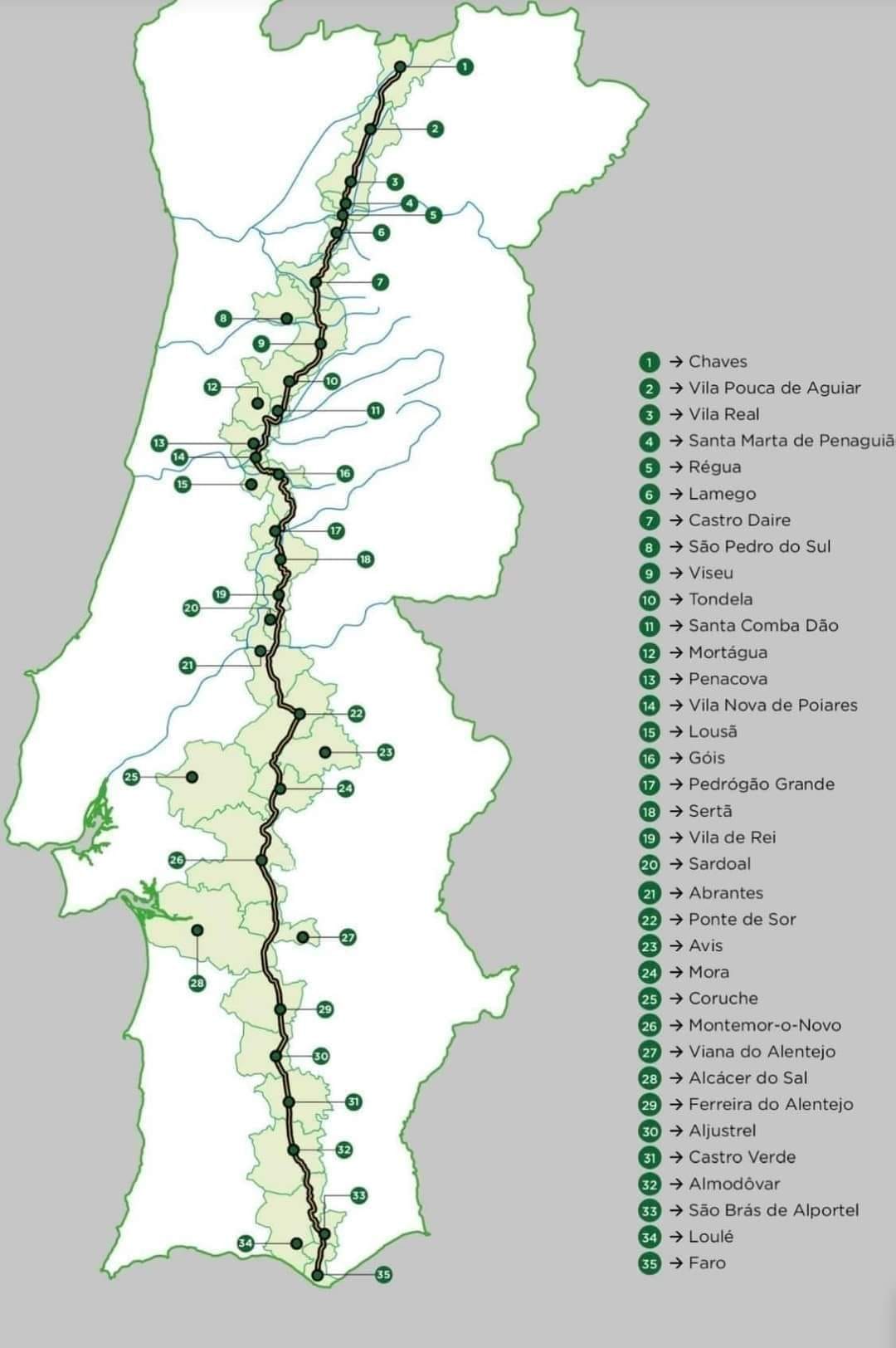
Cycling Portugal’s N2 in 7 days is a demanding journey covering approximately 739 kilometres from Chaves in the north to Faro in the Algarve.
It is a true end-to-end cycling challenge. Riders pass through mountain landscapes, river valleys, forests, traditional towns, the open plains of the Alentejo and the hills leading towards Faro.
A seven-day schedule averages more than 100 kilometres per day, but the stages are not equal. Some are defined by climbing, others by distance, exposure or the fatigue accumulated over the previous days.
This stage guide explains the approximate distance, climbing, character and difficulty of each day on the Ride With Pete seven-day route.
Portugal N2 Seven-Day Route at a Glance
The planned stages are approximately:
- Day 1: 93 km with 1,150 metres of climbing
- Day 2: 87 km with 1,540 metres of climbing
- Day 3: 95 km with 1,050 metres of climbing
- Day 4: 115 km with 1,900 metres of climbing
- Day 5: 144 km with 1,300 metres of climbing
- Day 6: 110 km with 930 metres of climbing
- Day 7: 97 km with 1,100 metres of climbing
That produces a total of approximately 741 kilometres and 8,970 metres of climbing.
The historic N2 is generally described as approximately 739 kilometres long. A cycling itinerary may record slightly more because of accommodation locations, route connections, diversions and differences between navigation devices.
Distances and elevations in this guide are approximate and may change if roads, accommodation or local conditions require adjustments.
For a broader introduction to the road, terrain and navigation, read our complete guide to the Portugal N2 cycle route.
Day 1: Chaves and the Journey South
Distance: Approximately 93 km
Climbing: Approximately 1,150 metres
Difficulty: Challenging
Character: Rolling northern roads and mountain landscapes
The N2 begins at its famous kilometre-zero marker in Chaves. After the photographs and anticipation, the journey finally turns south.
The opening stage introduces riders to the rolling character of northern Portugal. The road repeatedly rises and falls through green hills, small communities and open countryside.
It is tempting to ride hard because everyone is fresh and excited. That is usually a mistake. Nearly 650 kilometres remain after the first day, and energy spent unnecessarily in the opening hours cannot be recovered easily.
The first stage is about settling into the journey. Riders learn the group rhythm, begin understanding the road and discover whether their pacing, clothing and nutrition choices are working as planned.
What makes Day 1 difficult?
The distance and climbing are substantial enough to demand respect, particularly after travelling to Portugal. Excitement can also hide the effort until later in the stage.
How should you approach it?
Use easy gears on the climbs, eat and drink from the beginning and avoid chasing riders who are moving faster than your sustainable pace.
Finish the day knowing you could have continued further. That restraint becomes valuable later in the week.
Day 2: Repeated Climbing in Northern Portugal
Distance: Approximately 87 km
Climbing: Approximately 1,540 metres
Difficulty: Very challenging
Character: Frequent climbs, broad valleys and flowing descents
Day 2 has the shortest distance of the seven stages, but it should not be mistaken for an easy day.
Approximately 1,540 metres of climbing are compressed into fewer than 90 kilometres. The terrain repeatedly asks riders to climb, descend and climb again.
Northern Portugal provides wide views, dramatic structures and rewarding descents. It can be a beautiful day on the bicycle, but the changing elevation makes it difficult to establish the steady rhythm found on flatter roads.
The legs may also feel different after the opening stage. This is the first morning when riders discover how well they have recovered overnight.
What makes Day 2 difficult?
The climbing-to-distance ratio is high. Repeated short and medium climbs can gradually cause more fatigue than one easily identified ascent.
How should you approach it?
Ride the first climbs conservatively. Do not allow the shorter distance to justify a harder pace.
Use the descents and easier sections to eat, drink and recover. A controlled Day 2 leaves you better prepared for the heart of the route.
Day 3: Into the Heart of the N2
Distance: Approximately 95 km
Climbing: Approximately 1,050 metres
Difficulty: Moderate to challenging
Character: Forested roads, river landscapes and flowing terrain
Day 3 takes the journey deeper into Portugal.
Wooded hills, river gorges and winding roads give the stage a distinctive character. Climbs remain part of the day, but the distance and ascent are more balanced than during Day 2.
By this point, the N2 begins to feel less like a collection of individual rides and more like one continuous journey. Riders have established routines around breakfast, clothing, nutrition, stops and recovery.
The stage offers opportunities to settle into a comfortable rhythm, but nearly 100 kilometres and more than 1,000 metres of climbing still make it a proper day on the bicycle.
What makes Day 3 difficult?
Accumulated fatigue begins to matter. Small issues involving saddle comfort, hands, feet or bicycle setup may become more noticeable.
How should you approach it?
Use the smoother sections to ride efficiently without increasing the effort unnecessarily.
Pay attention to discomfort before it becomes an injury. Small adjustments made early can protect the remaining four days.
Day 3 is also an important opportunity to eat well and recover before the biggest climbing stage of the week.
Day 4: The Greatest Climbing Challenge
Distance: Approximately 115 km
Climbing: Approximately 1,900 metres
Difficulty: Very challenging
Character: Long climbs and the transition towards southern Portugal
Day 4 combines substantial distance with approximately 1,900 metres of climbing, making it the greatest climbing challenge of the seven-day route.
The landscape begins opening as the journey continues south, but the road still demands patience. Long ascents and repeated elevation changes can create a difficult second half if riders push too hard early.
This is the stage where training, gearing and pacing become particularly important. Completing 115 kilometres is demanding; combining that distance with the largest amount of climbing in the week makes it a serious endurance ride.
The reward is a strong sense of progress. The landscapes and colours begin to change as northern and central Portugal gradually give way to the wider horizons further south.
What makes Day 4 difficult?
This stage combines three separate challenges:
- More than 100 kilometres of riding
- The greatest amount of climbing in the week
- Fatigue accumulated over the first three days
How should you approach it?
Break the stage into smaller sections rather than thinking about the complete distance.
Climb at a pace you can maintain without straining, refuel before you feel hungry and use every suitable stop to refill water.
The final climbs are likely to feel considerably harder than the first ones, even if their gradients are similar.
Day 5: The Long Road Across the Alentejo
Distance: Approximately 144 km
Climbing: Approximately 1,300 metres
Difficulty: Very challenging
Character: Cork-oak countryside, open horizons and long quiet roads
At approximately 144 kilometres, Day 5 is the longest stage of the journey.
The landscape has changed. Open countryside, cork oaks, farmland and distant horizons replace many of the enclosed northern valleys.
The climbing total is lower than on Day 4, but the distance creates a different challenge. Long roads and exposed landscapes require mental patience as well as physical endurance.
Wind and temperature can significantly affect the stage. A favourable day may allow the kilometres to pass smoothly. Heat or an unfavourable wind can turn the same roads into a much greater test.
Food and water stops require careful planning because services can be more widely separated in rural areas.
What makes Day 5 difficult?
The total distance is the obvious challenge, but it arrives immediately after the biggest climbing day.
Riders must also remain focused for many hours. Poor pacing or nutrition in the first half can create an extremely difficult final section.
How should you approach it?
Begin more slowly than you think necessary.
Ride efficiently with the group, take advantage of planned stops and eat regularly throughout the day. Do not wait for hunger or thirst before responding.
Day 5 rewards patience. The objective is not to make the first 70 kilometres impressive; it is to complete all 144 kilometres in control.
Day 6: The Algarve Draws Closer
Distance: Approximately 110 km
Climbing: Approximately 930 metres
Difficulty: Challenging
Character: Rolling southern roads and the approach towards the Algarve
With fewer than two full stages remaining, the finish begins to feel real.
Day 6 contains the least climbing of the seven stages, but 110 kilometres still make it a substantial ride. After five consecutive days, even moderate gradients can feel harder than expected.
The terrain becomes more rolling, and the southern light and landscape create a noticeably different atmosphere.
This can be one of the most enjoyable days if riders have paced the previous stages well. The group has shared hundreds of kilometres, daily routines are familiar and Faro is now within reach.
What makes Day 6 difficult?
Accumulated fatigue is the main challenge. Riders may mistakenly assume that the lower climbing figure guarantees an easy day.
Long exposure to the saddle and repeated muscular effort can make apparently simple roads feel demanding.
How should you approach it?
Continue eating, drinking and pacing as carefully as on the earlier stages.
Do not abandon the routines that carried you this far simply because the finish is approaching. Enjoy the changing landscape while preserving enough energy for the final ride.
Day 7: The Final Stage to Faro
Distance: Approximately 97 km
Climbing: Approximately 1,100 metres
Difficulty: Challenging
Character: Algarve hills, final descents and the Faro finish
The final stage begins with the knowledge that the end of the N2 is less than 100 kilometres away.
However, the journey is not finished yet. Approximately 1,100 metres of climbing remain, and the road through the Algarve continues to rise and fall before the final approach to Faro.
The stage carries the accumulated effort of the complete week. Legs are tired, but the atmosphere changes as the final marker draws closer.
The scenery becomes recognisably southern, and every completed climb reduces the distance remaining between the group and Faro.
The final approach delivers something difficult to reproduce on an ordinary cycling holiday: the knowledge that you have travelled through Portugal from north to south under your own power.
What makes Day 7 difficult?
The climbing remains meaningful, and seven consecutive days of riding affect every cyclist differently.
Excitement can also reduce concentration. Riders must continue making safe decisions until the final kilometre.
How should you approach it?
Ride together, remain patient on the climbs and stay alert during the descents and approach to Faro.
The journey ends at the N2 marker, where the photographs carry a very different meaning from those taken in Chaves. The riders standing in Faro have earned them over approximately 739 kilometres.
Which Is the Hardest Day on the N2?
There is no single answer for every rider.
Day 4 is likely to be the most difficult for riders who struggle with climbing. It combines approximately 115 kilometres with around 1,900 metres of ascent.
Day 5 may be harder for riders whose main challenge is endurance. At approximately 144 kilometres, it is the longest stage and follows the biggest climbing day.
Day 7 can feel surprisingly difficult because fatigue has accumulated throughout the week, even though the finish provides strong motivation.
Weather also matters. Heat, rain or wind can completely change the difficulty of any stage.
Our guide explaining how hard it is to cycle Portugal’s N2 covers fitness, preparation and a suggested 12-week training structure.
Can the N2 Be Completed in More Than Seven Days?
Yes. Seven days is not the only way to cycle the N2.
Adding extra stages reduces the average daily distance and creates more time for recovery, cafés, photographs and sightseeing. This may suit cyclists carrying their own luggage or riders who prefer a more relaxed journey.
However, additional days also require more accommodation, a larger travel budget and extra time away.
The best schedule is the one suited to your fitness, experience and reason for undertaking the ride.
Seven days creates a demanding achievement ride. A longer itinerary creates a different experience, not an inferior one.
Guided or Self-Guided?
Ride With Pete offers two ways to benefit from Pete’s experience of the N2.
Seven-Day Fully Guided Tour
The Ride With Pete Guided N2 Cycling Tour follows the seven-stage structure described in this guide.
Pete rides every stage with the group while an experienced support driver manages luggage, planned stops and practical logistics.
The guided experience includes:
- Seven planned riding stages
- Accommodation throughout the tour
- Breakfast, lunch and evening meals
- Planned café and refreshment stops
- Daily luggage transport
- An experienced support driver
- GPX route files
- Pete riding with the group
- Small groups of six to eight paying riders
The guided tour is designed for prepared cyclists who want the route, accommodation and daily logistics organised for them.
N2 Self-Guided Adventure Pack
The N2 Self-Guided Adventure Pack suits riders who prefer to choose their own dates, companions and pace.
It provides prepared route files, stage information and practical planning guidance. You remain responsible for booking accommodation, transporting luggage, arranging meals and making decisions throughout the journey.
The Adventure Pack provides preparation and structure, but it does not include a guide, support vehicle, accommodation or luggage transfers.
Seven Days and One Complete Journey Across Portugal
Cycling Portugal’s N2 in seven days requires more than completing seven separate rides.
Each stage affects the next. Pacing on Day 1 influences how your legs feel on Day 2. Nutrition during the major climbing stage affects the longest day. Recovery every evening helps determine how you approach the final road to Faro.
The route rewards consistency rather than speed.
Prepare properly, respect every stage and avoid spending tomorrow’s energy today. Do that, and seven demanding days become one unforgettable journey across Portugal.