Guided or Self-Guided: What Is the Best Way to Cycle the N2?
Should you cycle Portugal’s N2 guided or self-guided?
The best option depends on how much independence you want, how confident you are managing the logistics and whether you would rather carry responsibility for the complete journey or have support around you.
A fully guided N2 tour provides accommodation, luggage transport, organised stops, a guide riding with the group and practical vehicle support.
A self-guided ride gives you control over your dates, pace, companions and daily schedule. It also leaves you responsible for accommodation, transport, luggage, navigation and dealing with problems along the way.
Neither option is automatically better. They provide different experiences for different riders.
This honest comparison explains what changes when you choose a guided or self-guided N2 cycling journey.
What Does Cycling the N2 Involve?
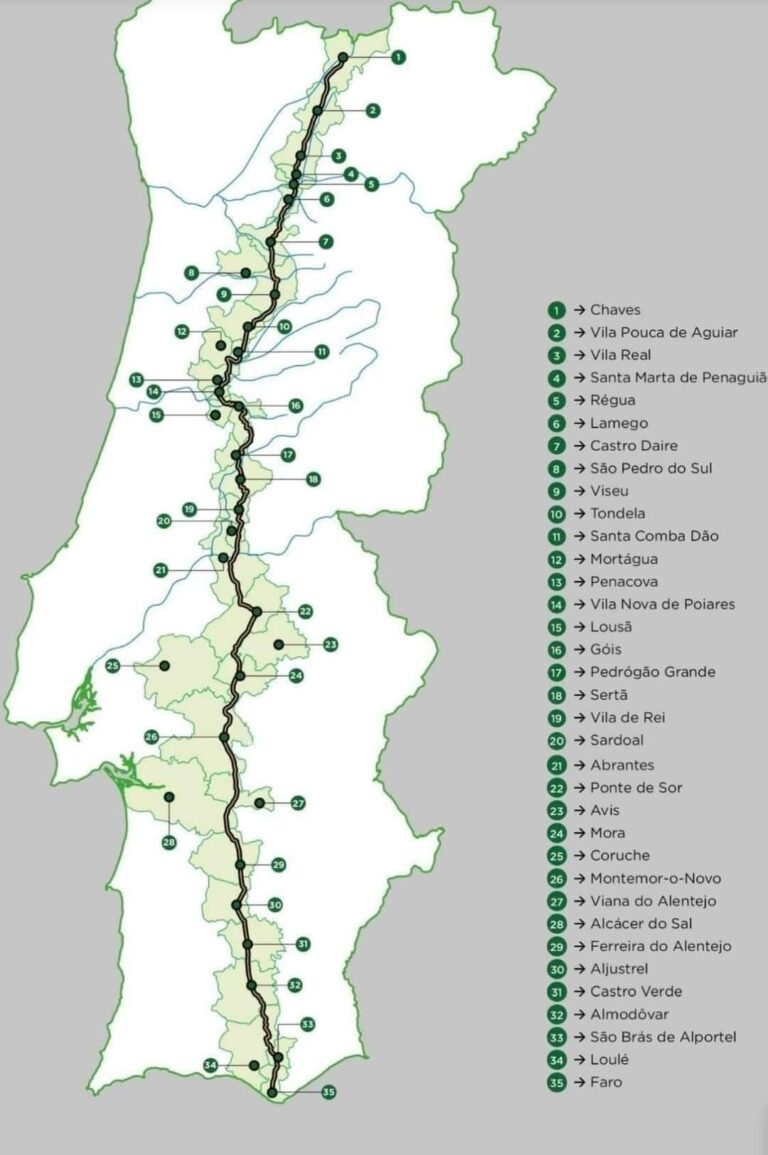
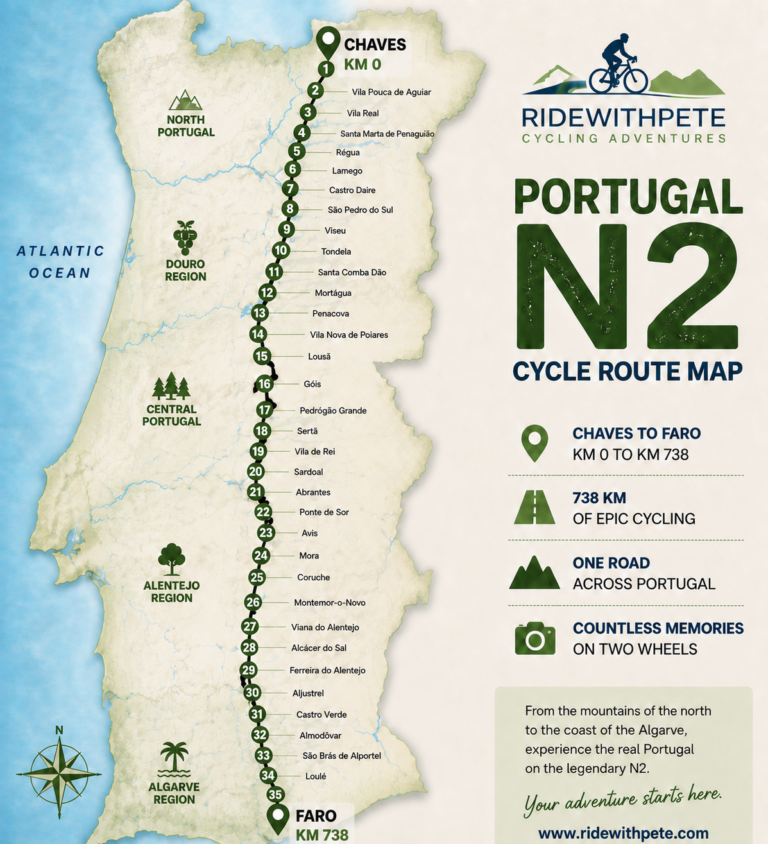
Portugal’s Estrada Nacional 2 runs approximately 739 kilometres from Chaves in northern Portugal to Faro in the Algarve.
A seven-day itinerary averages more than 100 kilometres per day and can include approximately 9,000 metres of climbing across the complete journey.
The cycling is only one part of the undertaking.
Someone must also organise:
- Travel to Chaves
- Accommodation throughout the route
- Daily navigation
- Food and water
- Luggage
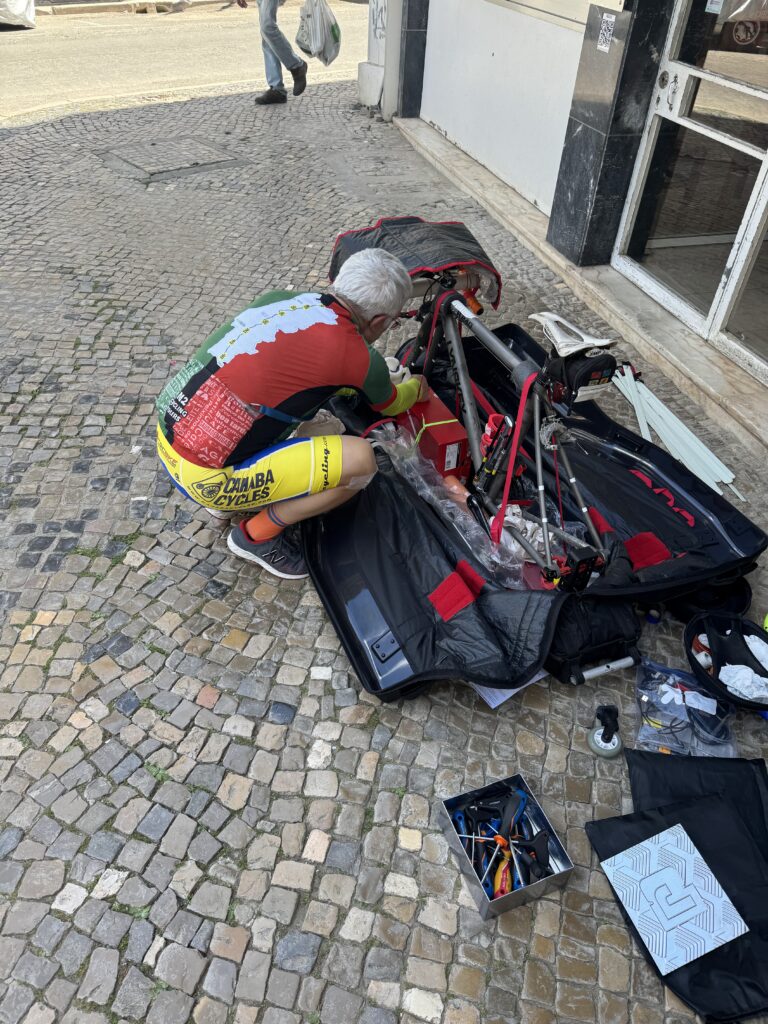
- Bicycle preparation
- Mechanical problems
- Changes caused by weather or road conditions
- Transport after reaching Faro
On a guided tour, many of those responsibilities are handled for you. On a self-guided ride, they remain part of your own adventure.
Our complete Portugal N2 cycle route guide explains the road, terrain and overall challenge in greater detail.
What Is a Fully Guided N2 Tour?
A fully guided tour is an organised journey with a planned itinerary and support throughout the route.
On the Ride With Pete tour, Pete rides every stage with the group. An experienced support driver transports luggage, meets the riders at planned stops and handles practical arrangements behind the scenes.
Accommodation and organised meals are included, removing much of the daily decision-making from the riders.
The guided tour follows a seven-day schedule, with each stage forming part of a complete route from Chaves to Faro.
You still need the fitness and preparation to complete the distance and climbing. Guided support does not make the bicycle move for you.
What it changes is the amount of energy and attention you must spend on everything surrounding the ride.
What Is a Self-Guided N2 Ride?
On a self-guided ride, you choose your dates, travelling companions, pace and daily routine.
You book your accommodation, arrange transport, decide how to handle luggage and remain responsible for navigating the route.
This can provide a strong sense of freedom.
You can stop when a café looks inviting, take photographs without worrying about the group, add a rest day or spend longer in a town you particularly enjoy.
That freedom comes with responsibility. If accommodation changes, a road closes or a mechanical problem occurs, you must decide what to do next.
Self-guided does not necessarily mean riding alone. You can ride with a partner, friends or your own private group while remaining independent of an organised tour.
What Is the N2 Self-Guided Adventure Pack?
There is an important distinction between planning the route entirely from scratch and using a prepared self-guided product.
The Ride With Pete N2 Self-Guided Adventure Pack provides route files, stage information and practical planning guidance based on Pete’s experience of riding the N2.
It is designed for cyclists who want independence without beginning with an empty map.
The Adventure Pack includes:
- A prepared complete N2 route
- Individual daily-stage GPX files
- Distance and climbing information
- A detailed rider guide
- Accommodation-planning guidance
- Equipment and packing advice
- Navigation instructions
- Portugal-specific cycling information
- Practical emergency guidance
It remains a digital self-guided product.
It does not include accommodation, meals, luggage transport, a guide, a support vehicle, roadside rescue or somebody monitoring your journey in real time.
You receive the preparation and route structure, but you remain responsible for carrying out the trip.
Freedom and Flexibility
Freedom is one of the strongest advantages of a self-guided ride.
You decide:
- When to travel
- Who accompanies you
- How many days to allow
- Where to stay
- When to start each morning
- How long to spend at each stop
- Whether to include rest days
- How quickly to ride
If you prefer ten days instead of seven, you can divide the route accordingly. If you want to remain somewhere for an additional night, that decision is yours.
A guided tour has less flexibility because accommodation, transport and support arrangements are organised around a particular schedule.
The group needs to move through the route together, and every rider’s choices affect other participants.
That structure is an advantage for some cyclists and a limitation for others.
Choose self-guided if personal control is one of the main reasons you want to undertake the journey. Choose guided if you would prefer to follow a well-organised plan and concentrate on riding.
Navigation
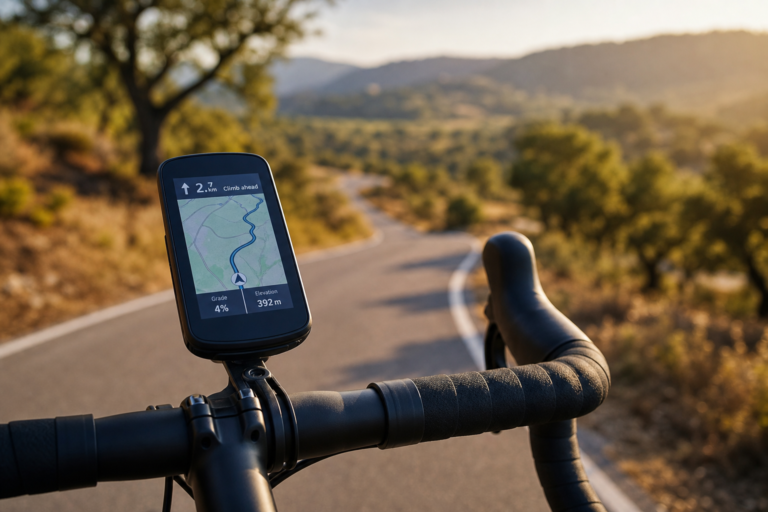
The N2 is not always as simple as following one continuous set of road signs from Chaves to Faro.
Parts of the historic route have been bypassed, interrupted or reclassified as Portugal’s road network has changed. Reliable GPX navigation is strongly recommended.
Self-guided riders must:
- Load the route onto their device
- Confirm that the files work
- Review each stage
- Keep devices charged
- Maintain a backup navigation method
- Respond to closures and diversions
- Make safe decisions when local conditions change
The Adventure Pack provides prepared GPX files and guidance for using them with compatible devices, but the rider remains responsible for navigation.
On the guided tour, riders also receive the route files, but Pete rides every stage with the group. You are not left to interpret every junction alone.
If navigation is a source of anxiety, the guided option provides meaningful reassurance.
If you are already comfortable following GPX routes through unfamiliar areas, self-guided navigation may feel like a normal part of the journey.
Luggage
Luggage creates one of the largest practical differences between the two options.
A self-guided rider must decide whether to:
- Carry everything on the bicycle
- Arrange independent luggage transfers
- Travel extremely light
- Use panniers, bikepacking bags or another luggage system
Carrying luggage adds weight and can make climbing more difficult. It may also affect handling, braking and the amount of effort required over long stages.
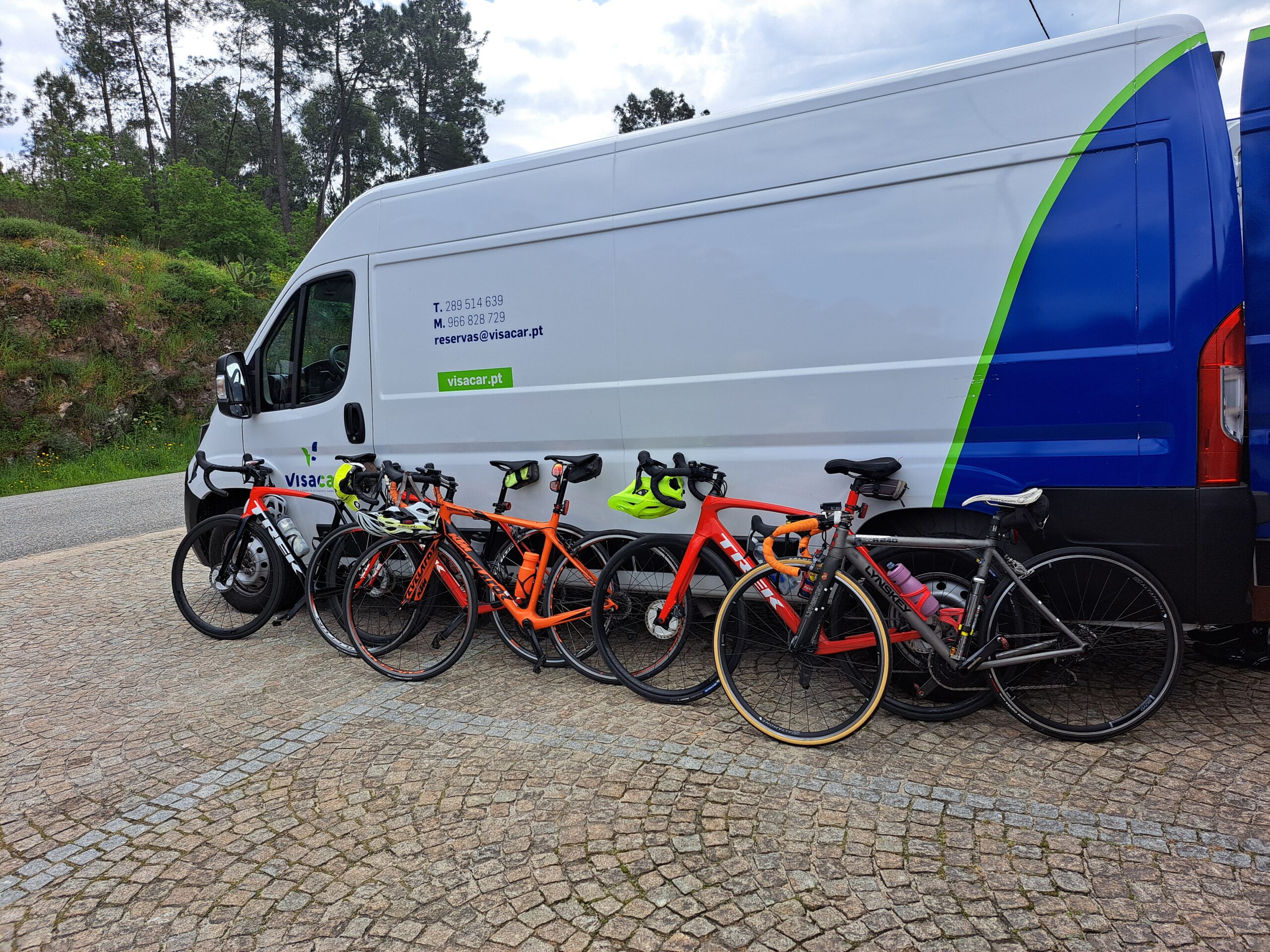
On the guided tour, the support vehicle transports the main luggage between accommodation. Riders carry only what they need during the stage.
This does not remove the climbing or distance, but it prevents your main travel bag from becoming part of the physical challenge.
Cyclists experienced in bikepacking may enjoy the self-sufficiency of carrying their own equipment. Riders accustomed to an unloaded road bike may strongly prefer luggage support.
Accommodation and Meals
Self-guided riders select and book their own accommodation.
This provides control over budget and style, but suitable locations must work with the planned stage distances. You should also confirm secure bicycle storage, check-in arrangements and nearby food options.
During busy periods, limited availability can force changes to the intended itinerary.
You must also find food and water throughout each stage. Cafés and restaurants are part of the pleasure of the N2, but opening hours and availability can vary in smaller communities.
The guided tour includes arranged accommodation, breakfast, planned café stops, lunch and evening meals as described on the tour page.
That structure reduces the number of decisions required after a long day on the bicycle.
Some riders enjoy researching restaurants and selecting every hotel. Others would rather arrive, shower, eat and recover without opening another booking application.
Support When Something Goes Wrong
Unexpected problems can occur on any multi-day ride.
Possible issues include:
- Punctures
- Mechanical failures
- Illness
- Extreme heat
- Heavy rain
- Road closures
- Navigation errors
- A rider being unable to complete the stage
Independent riders must have a plan for handling these situations. That may involve carrying more tools, locating a bicycle shop, arranging a taxi or changing accommodation.
The Self-Guided Adventure Pack provides planning and emergency guidance, but it does not include roadside rescue or live support.
On the guided tour, basic tools and pumps are carried, and the support vehicle provides a practical fallback.
If a roadside repair is not possible, the vehicle may take the bicycle to the nearest suitable shop. If a rider cannot complete a stage, the vehicle may assist subject to its limited passenger capacity.
The support vehicle should not be viewed as an alternative way to complete the route. Its purpose is to help prepared riders when a genuine difficulty occurs.
Riding Alone or Sharing the Experience
Some cyclists value solitude and complete independence. Others find that sharing the challenge becomes one of the most memorable parts of the N2.
A self-guided ride can be completed alone or with people you already know.
Riding alone gives you complete control, but every decision and problem belongs to you. Riding with friends provides company, although differences in fitness, pace and expectations should be discussed before travelling.
The guided tour creates a small group of six to eight paying riders.
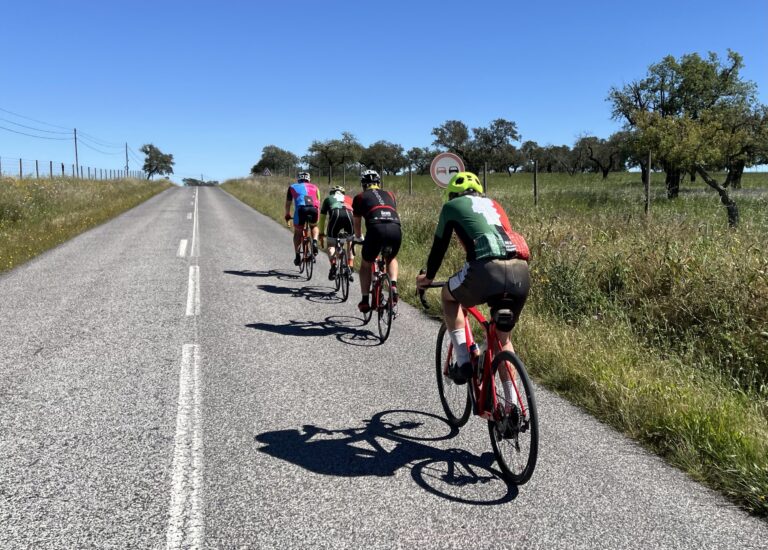
The experience is shared rather than raced. Pete manages the pace to help the group complete the journey together, usually aiming for a moving speed of approximately 21–24 km/h depending on terrain, weather and the group.
Choose carefully based on your personality. Some riders thrive when surrounded by a supportive group. Others feel happiest with an open road and no schedule beyond their own.
Fitness and Pacing
Both options require preparation.
A guided tour does not eliminate the need to train. Riders still face seven consecutive days, long stages and repeated climbing.
The difference is that guided riders do not also carry their main luggage or manage every logistical decision.
Self-guided cyclists control their pace and can divide the route across more days. This may make the daily riding more manageable, although carrying luggage can add physical difficulty.
A seven-day guided schedule suits prepared recreational cyclists comfortable with long consecutive rides and a moving pace of approximately 21–24 km/h.
A self-guided itinerary can be adapted to almost any sensible number of days.
Read our guide explaining how hard it is to cycle Portugal’s N2 before deciding which schedule suits you.
Cost and Value
A self-guided ride will usually have a lower initial cost, but the Adventure Pack is not the complete cost of the journey.
You must separately pay for:
- Travel
- Accommodation
- Meals and drinks
- Transport to Chaves
- Travel from Faro
- Luggage arrangements
- Bicycle transport or hire
- Insurance
- Unexpected expenses
You control those costs by selecting your own accommodation, meals and itinerary.
A guided tour has a higher price because it combines the route with accommodation, organised meals, luggage transport, guiding, a support driver and practical tour arrangements.
The right comparison is not simply the price of the guided tour against the price of a digital pack.
The real question is how much support, convenience and organisation you want included—and how much responsibility you want to retain.
Choose the Guided N2 Tour If…
The Ride With Pete Guided N2 Cycling Tour is likely to suit you if:
- You want accommodation organised
- You do not want to carry your main luggage
- You value having Pete ride with the group
- You want planned food and refreshment stops
- You prefer a small-group experience
- You want a support vehicle available
- Navigation in an unfamiliar country concerns you
- You want to concentrate on cycling rather than logistics
- A fixed seven-day schedule suits your fitness and travel plans
You still need to train, bring a suitable bicycle and accept personal responsibility for your fitness, insurance and equipment.
Choose the Self-Guided Adventure Pack If…
The N2 Self-Guided Adventure Pack is likely to suit you if:
- You want to choose your own dates
- You prefer riding alone or with your own companions
- You want complete control over pace and stops
- You may take more than seven days
- You are comfortable booking accommodation
- You can manage your own luggage
- You are confident using GPX navigation
- You can deal independently with unexpected problems
- You want Pete’s route preparation without joining a tour
The Adventure Pack saves planning time and provides a prepared foundation. It does not transfer responsibility for the journey to Ride With Pete.
Questions to Ask Before Deciding
If you are still unsure, ask yourself:
- Do I want fixed dates or complete control over when I travel?
- Am I comfortable navigating independently in another country?
- Do I want to carry luggage or arrange my own transfers?
- Would I enjoy being part of a small group?
- Can I manage accommodation and food planning?
- How would I respond to a serious mechanical problem?
- Do I want to ride the route in seven days or create my own schedule?
- Is removing logistical responsibility worth the additional cost to me?
- Do I want personal support or maximum independence?
- Which option would allow me to enjoy the journey more?
Your answers will usually make the correct choice clearer.
Two Different Ways to Experience the Same Road
The guided and self-guided options lead along the same extraordinary road, but they create different experiences.
The guided tour provides structure, company, luggage transport and practical support. It suits riders who want the journey organised around them while they focus on completing each stage.
The Adventure Pack provides freedom, prepared routes and planning knowledge. It suits independent cyclists who want to control their own journey while avoiding the need to research everything from the beginning.
Neither option removes the physical challenge. Neither option guarantees perfect weather or a problem-free week.
The best way to cycle the N2 is the one that matches your experience, confidence and idea of an enjoyable adventure.
Choose support if support will help you enjoy the road. Choose independence if planning and self-reliance are part of the experience you want.
Then prepare properly and make the journey from Chaves to Faro your own.