What to Pack for Cycling Portugal’s N2
Packing for Portugal’s N2 is a little different from packing for an ordinary cycling holiday.
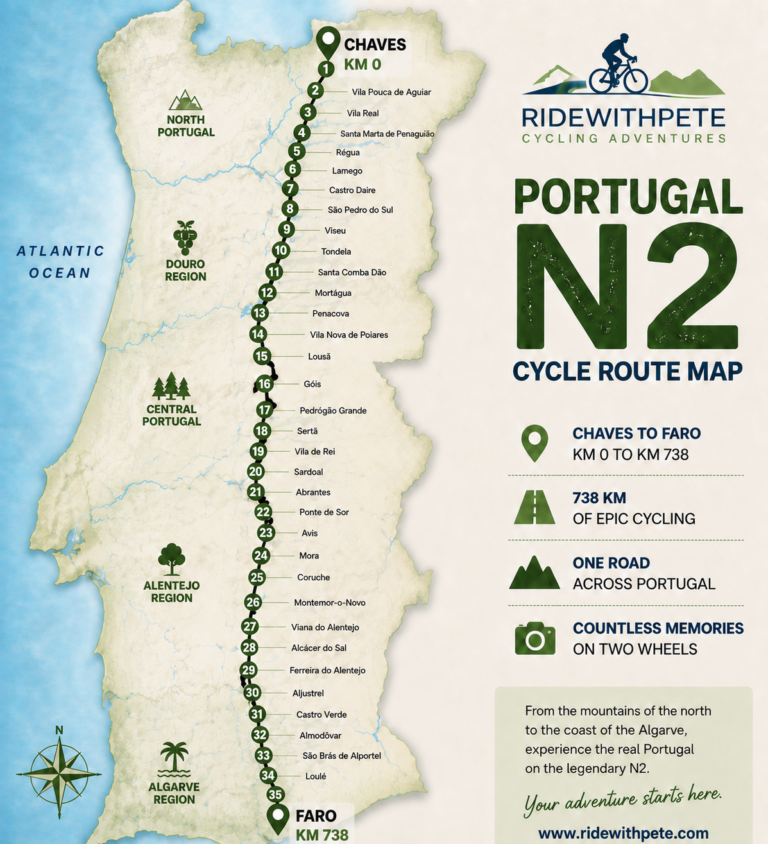
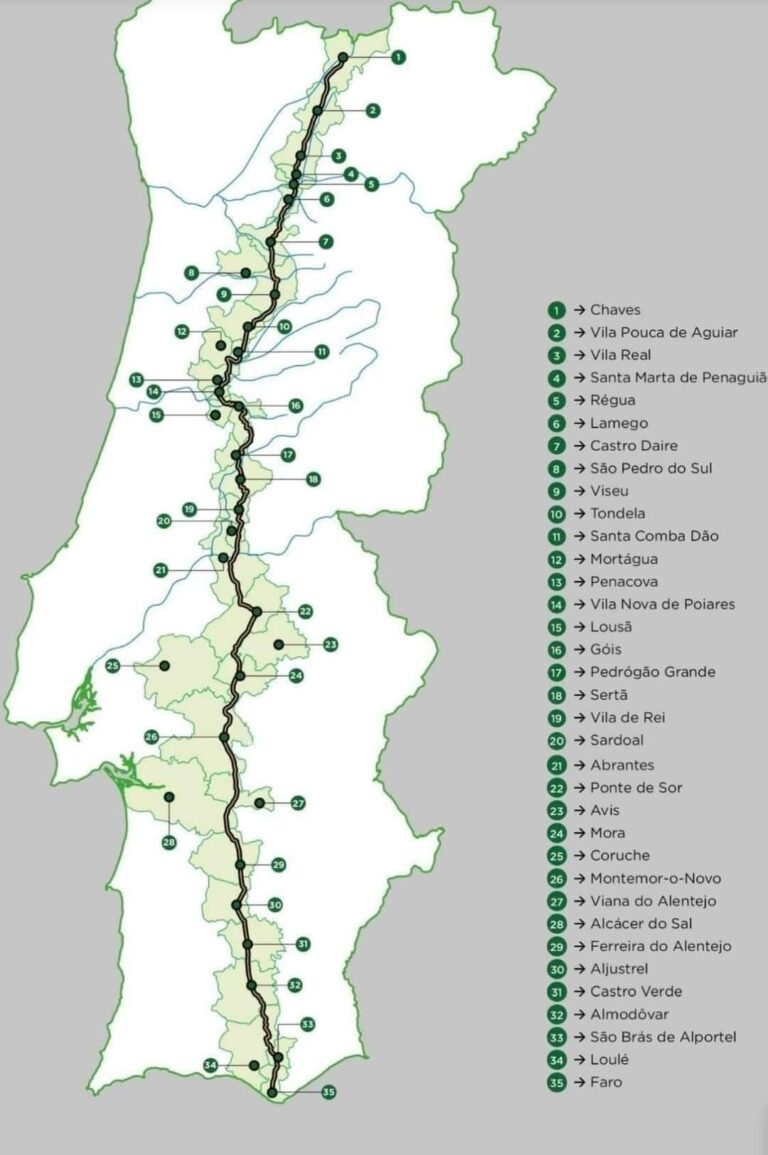
You’re preparing to ride 738 km from Chaves to Faro over seven days, crossing very different parts of Portugal along the way.
Conditions in the mountains of northern and central Portugal can feel very different from those you encounter later in the Alentejo and Algarve.
You need enough equipment to deal with changing weather, long days and the ordinary mechanical problems that come with road cycling.
But you don’t want to bring half your garage with you.
This Portugal N2 packing list is therefore based around a simple principle:
Bring what you’re genuinely likely to need and leave the unnecessary stuff at home.
If you’re joining a supported RideWithPete N2 tour, you don’t need to prepare as though you’re disappearing into the wilderness.
But there are still some things every rider should bring.
Start With Your Bike
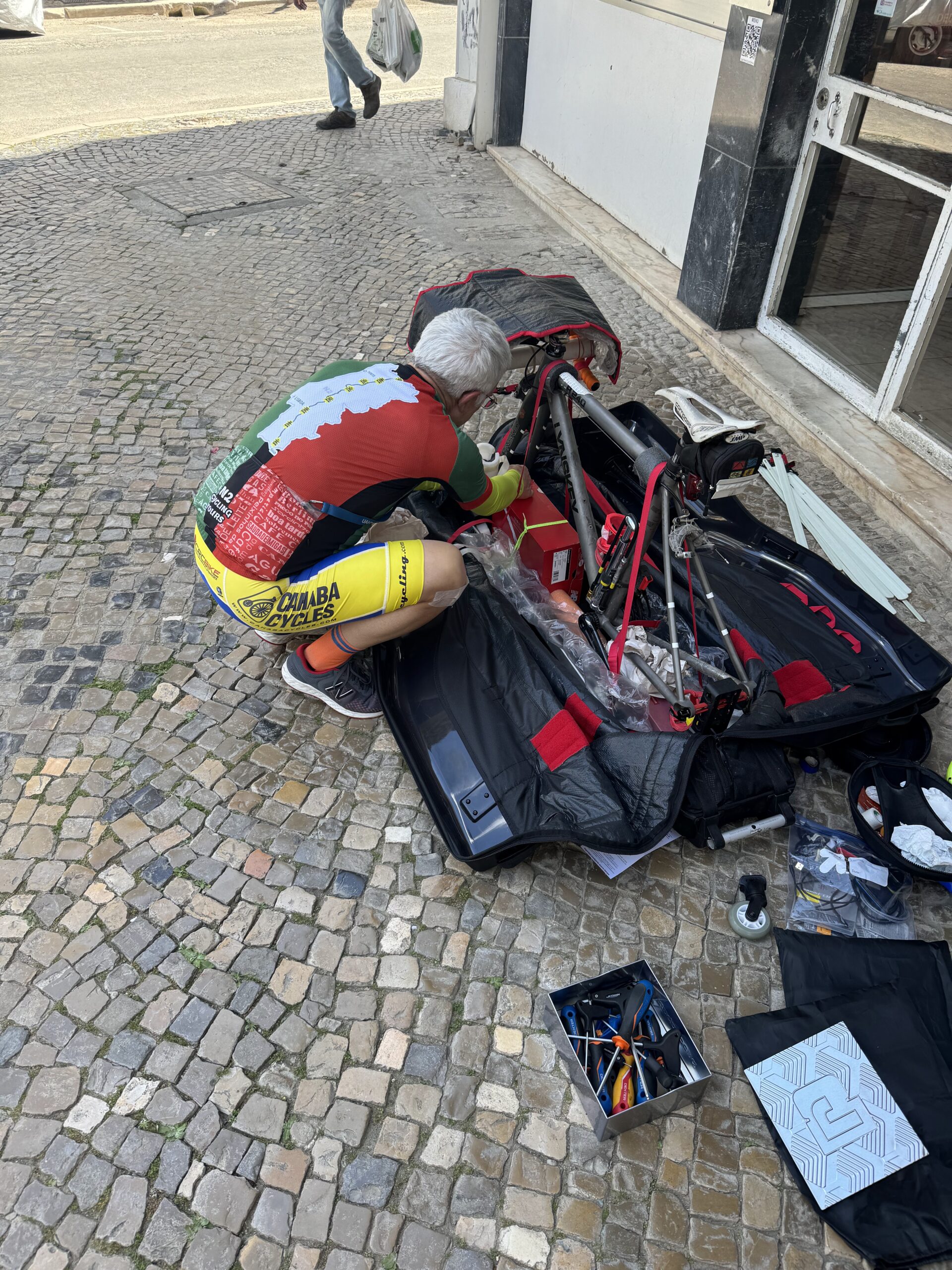
If you’re bringing your own bike, get it properly prepared before travelling to Portugal.
Don’t wait until the first morning of the N2 to discover that your brake pads are nearly finished or your tyres should have been replaced.
Seven consecutive days of cycling put considerably more demand on equipment than a normal weekend ride.
Check:
- Tyres
- Brake pads
- Chain
- Cassette
- Gears
- Cables or hydraulic systems
- Wheel condition
- Bearings
- Cleats
- Electronic shifting batteries, if applicable
If something is already approaching the end of its useful life, replacing it before the trip is usually the sensible choice.
The N2 is an adventure.
Trying to locate a specific replacement component halfway across Portugal isn’t the kind of adventure we’re aiming for.
Bring the Spares That Fit Your Bike
This is particularly important.
Not every bike uses the same equipment.
RideWithPete carries basic tools and track pumps for the group where required, but you should bring appropriate personal spares for your own bicycle.
At minimum, think about the things specific to your setup.
If you’re running inner tubes, bring suitable tubes.
If you use unusual valve lengths, don’t assume somebody else will have them.
If your bike uses proprietary or unusual components, consider what would happen if one failed.
A tiny bike-specific spare can weigh almost nothing in your luggage but save a very big headache on the road.
Tubes and Puncture Equipment
Even if you’re riding tubeless, I’d still want an emergency tube available.
Tubeless systems are excellent when they work.
They’re less impressive when you’ve got a problem that sealant won’t solve and you’re standing at the side of a Portuguese road.
Depending on your setup, consider:
- Suitable inner tubes
- Tyre levers
- Tubeless repair plugs
- Small amount of appropriate repair equipment
- Valve cores if relevant
You don’t need enough equipment to open a bicycle workshop.
You need enough to deal with the realistic problems your particular bike might experience.
Cycling Clothing
Seven riding days doesn’t necessarily mean seven completely separate cycling outfits.
But bring enough kit that washing and drying doesn’t become a nightly emergency.
My basic Portugal N2 packing list would include several pairs of good-quality bib shorts and enough jerseys to rotate comfortably.
Don’t suddenly buy completely different shorts immediately before the trip and discover on day two that you hate them.
Use kit you already know works.
For seven consecutive days, comfort matters enormously.
Bib Shorts Matter More Than You Think
Your legs may get most of the attention during training.
After several consecutive 100 km-ish days, another part of your anatomy may have stronger opinions.
Bring bib shorts you trust.
If you have several pairs, rotate them.
Keeping kit clean becomes increasingly important during a multi-day ride.
Chamois cream is a personal choice, but if you normally use it on long rides, bring it.
This isn’t the week to experiment with an entirely new saddle, new shorts and a new bike position simultaneously.
Jerseys and Base Layers
Bring jerseys suitable for the conditions expected during your trip.
A lightweight base layer can also be useful.
The temperature at the beginning of a riding day isn’t necessarily what you’ll experience several hours later.
This becomes especially noticeable when climbing and descending.
You might be sweating heavily on the way up and then feel surprisingly cool when descending at speed.
Layers give you options.
Arm and Leg Warmers
These are excellent pieces of kit for the N2 because they provide flexibility without taking up much space.
Cool morning?
Put them on.
Temperature rises?
Take them off and put them in a jersey pocket.
They’re particularly useful during spring and autumn, which are the periods we favour for riding the N2.
If you’re still deciding when to tackle the route, our guide to the best time of year to cycle Portugal’s N2 explains why timing matters.
A Proper Rain Jacket
Bring one.
Even if the forecast looks wonderful.
Portugal has plenty of sunshine, but a seven-day journey covering 738 km gives the weather plenty of opportunities to change.
A lightweight, packable cycling rain jacket is ideal.
It should be small enough that carrying it isn’t an inconvenience.
You may never use it.
That’s fine.
The day you do need it, you’ll be very glad it’s there.
Wind Protection
A lightweight windproof layer is another extremely useful item.
The N2 includes substantial climbing and descending.
Something that feels unnecessary while you’re climbing can become very welcome when you start descending.
Wind conditions also vary considerably as you move through Portugal.
We deliberately ride the N2 north to south, partly because this can give us a better chance of favourable prevailing winds during our preferred riding periods.
But favourable doesn’t mean guaranteed.
Pack accordingly.
Gloves
Bring the gloves you normally use.
Full-finger gloves may also be useful depending on the season and forecast.
Apart from comfort, gloves offer some protection if you have the misfortune to come off the bike.
Seven days is a long time to discover that a particular pair creates pressure points or numbness, so again, use equipment you’ve already tested.
Helmet
For RideWithPete guided cycling, an appropriate cycling helmet is required.
Bring one that fits correctly and is in good condition.
If your helmet has been involved in a significant impact, replace it.
This isn’t an area where saving a few euros makes much sense.
Cycling Shoes
Bring shoes you’ve already ridden long distances in.
The same applies to cleats.
Check their condition before travelling.
If your cleats are heavily worn, replace them before the trip and ride with the replacements beforehand.
Don’t install a new pair the night before flying to Portugal and discover on day one that you’ve positioned them incorrectly.
Small setup changes become very noticeable after several consecutive days.
Sunglasses
Portugal can be extremely bright.
Good cycling glasses aren’t just about sunlight either.
They help protect your eyes from insects, dust and road debris.
Clear or low-light lenses can be useful if conditions are dull.
Whatever you use, make sure they’re comfortable with your helmet.
Sun Protection
Do not underestimate the Portuguese sun simply because you’re travelling outside July or August.
You’re going to spend hours outdoors every day.
Bring high-factor sunscreen and actually use it.
Pay particular attention to exposed areas that cyclists often forget.
The back of your neck, ears and the gaps around cycling kit can receive a surprising amount of sun during a long riding day.
Hydration
Bring the bottles you normally use and make sure the bottle cages on your bike hold them securely.
Two bottles are appropriate for most road-bike setups.
Hydration requirements depend on temperature, distance, effort and the individual rider.
Don’t wait until you’re badly thirsty before thinking about drinking.
By that point, you’re already playing catch-up.
Nutrition
You don’t need to fly to Portugal carrying a suitcase full of energy bars.
Food and supplies are available here.
However, if you have particular nutrition products that you know work well for you, bring some.
The middle of a seven-day tour isn’t the ideal time to discover that a new gel doesn’t agree with your stomach.
Long-distance cycling nutrition doesn’t need to be complicated.
Eat regularly.
Drink regularly.
Don’t wait until you’re empty.
GPS Bike Computer
A GPS cycling computer is extremely useful on the N2.
Garmin, Wahoo and similar devices are commonly used.
Make sure you know how yours works before arriving.
That sounds ridiculous until you’ve watched somebody trying to work out an unfamiliar navigation screen while everybody else is ready to ride.
If you’re riding independently, navigation becomes even more important.
Our N2 Self-Guided Cycling Adventure is designed for riders who want to tackle the N2 independently with the route information already prepared.
Charging Cables
This deserves its own section because forgetting one tiny cable can be remarkably annoying.
Think about everything you’re bringing that requires charging:
- Phone
- GPS computer
- Electronic gears
- Lights
- Watch
- Camera
- Power bank
- E-bike equipment, where applicable
Then bring the correct chargers.
If several devices use the same connection, a multi-port USB charger can reduce the number of plugs you need.
Electronic Shifting
If you’re using electronic gears, charge them.
Then charge them again before you travel.
Bring the appropriate charging cable.
Modern electronic systems have excellent battery life, but that’s irrelevant if you arrive with a nearly empty battery and the charger sitting on your kitchen table.
Charging equipment is one of those things that’s very easy to overlook because you don’t normally carry it on a day ride.
Phone and Emergency Information
Carry your phone with you rather than burying it somewhere inaccessible.
Save important contact details.
It is also sensible to have emergency contact information available in a way that could be accessed if you were unable to communicate yourself.
Many phones and cycling devices provide emergency-information functions.
Set them up before travelling.
Power Bank
A small power bank can be useful, particularly if your phone is being used heavily for photographs, navigation or communication.
You don’t need an enormous brick.
Just enough backup capacity to get you through a day if something hasn’t charged properly overnight.
Lights
Even when we’re planning to ride entirely in daylight, compact front and rear lights are worthwhile.
A daytime rear light can improve visibility to approaching traffic.
Conditions can also become darker than expected during poor weather or on shaded roads.
Charge them along with everything else.
A Small Saddle Bag
Keep the essentials organised.
A small saddle bag is ideal for tubes, tyre levers and other compact repair equipment.
That means the basics stay with the bike rather than being moved between jersey pockets every morning.
Just make sure nothing rattles endlessly for 738 km.
You’ll hate it by Faro.
Medication
Bring any personal medication you require, with enough for the whole trip.
Don’t assume a specific medication will be immediately available in Portugal under the same brand name.
If you have relevant medical information that somebody may need in an emergency, make sure it’s accessible.
You don’t need to tell everybody your entire medical history.
But information relevant to safe participation shouldn’t be hidden.
Travel and Cycling Insurance
This isn’t optional for RideWithPete customers.
All riders must arrange appropriate travel and cycling insurance suitable for the activities booked.
Check the policy rather than simply assuming you’re covered.
Road cycling, medical expenses, emergency treatment, repatriation, cancellation and bicycle-related risks should all be considered according to your circumstances.
Our full requirements are set out in the RideWithPete Terms & Conditions.
What Should Go in Your Overnight Luggage?
This is where you can relax a little.
You’re not riding unsupported across a desert.
Bring normal comfortable clothing for evenings.
You don’t need much.
After a full day on the N2, nobody cares whether you’ve brought seven different evening outfits.
Comfortable clothes and shoes are enough.
A lightweight pair of casual shoes is particularly useful after spending hours in cycling shoes.
Toiletries and Personal Items
Normal travel rules apply.
Bring what you need without turning it into an expedition.
One thing worth remembering is that repeated days outdoors can be tough on skin.
Sunscreen, moisturiser and whatever personal cycling-care products you normally use deserve space in the bag.
Don’t Overpack
This might be the most important item on the entire Portugal N2 packing list.
You don’t need everything.
People often pack for highly unlikely situations while forgetting simple things they’ll use every day.
Prioritise:
Safety → comfort → bike-specific essentials → weather protection → electronics.
Everything else is secondary.
What You Don’t Need to Bring
You don’t need an entire workshop.
You don’t need enough food for 738 km.
You don’t need clothing for every possible weather event Portugal has experienced since records began.
And you don’t need to carry everything on the bike if you’re joining a supported tour.
One of the advantages of a guided N2 journey is removing much of the logistical burden.
You’re here to ride Portugal.
Not haul your possessions across it.
Do a Test Pack Before You Travel
Don’t pack for the first time on the evening before your flight.
Lay everything out.
Charge everything.
Check the bike.
Check your spares.
Check the chargers.
Then ask yourself:
What have I forgotten?
After that, ask another useful question:
What am I taking that I don’t actually need?
Usually you’ll find something in both categories.
The Best N2 Packing List Is a Personal One
No two cyclists need exactly the same equipment.
Someone riding mechanical gears has different requirements from somebody using electronic shifting.
A tubeless rider needs different spares from somebody using inner tubes.
An e-bike rider has additional charging considerations.
And somebody who feels cold easily will make different clothing choices from somebody who rides through winter in shorts.
Use this list as a framework.
Then adapt it to your bike, your body and your riding habits.
Ready for the N2?
Once the bike is prepared and the bags are packed, the exciting part starts.
Seven days.
738 km.
Chaves to Faro.
Mountains, valleys, villages, long open roads and a landscape that changes dramatically as you travel south.
If you’d rather concentrate on riding while somebody else deals with much of the planning and logistics, take a look at our 2027 N2 guided tour dates.
And if you’re still researching the challenge, our complete guide to cycling Portugal’s N2 is the best place to start.
Pack sensibly.
Prepare the bike properly.
Then enjoy the ride.